In Greece, the New Year does not begin quietly. It starts with a sound — the sharp, hopeful crack of a pomegranate hitting stone — and with it, a wish released into the house before the year has even found its footing.
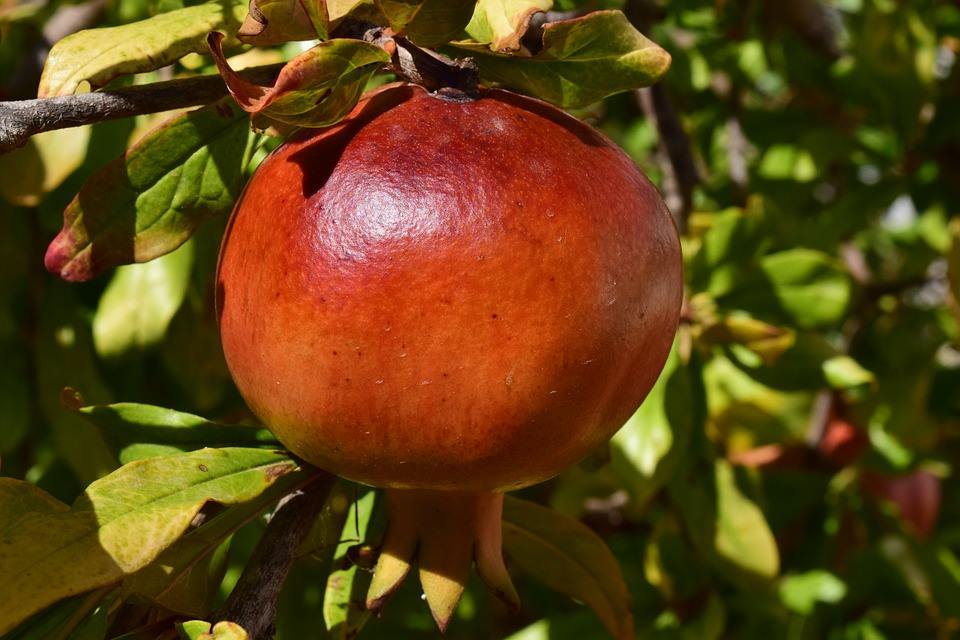
Breaking a pomegranate on New Year’s Day is one of the oldest living customs in Greek tradition, a ritual that extends beyond superstition into the symbolic language of life itself. The fruit, heavy with ruby-red seeds, has long been associated with abundance, fertility, renewal, and good fortune. Its meaning is not subtle. A pomegranate holds hundreds of seeds within a single skin, and to ancient minds, this quiet excess could only signify prosperity.
Long before Christianity, the pomegranate was revered in the ancient Greek world as a symbol of life, continuity, and eternity. Its vivid interior, hidden beneath a rough exterior, mirrored the idea that richness often lies unseen, waiting to be revealed. The Greeks believed that the more seeds spilled, the more blessings would follow — a belief that still guides the ritual today.
The Ritual as It Is Practiced Today
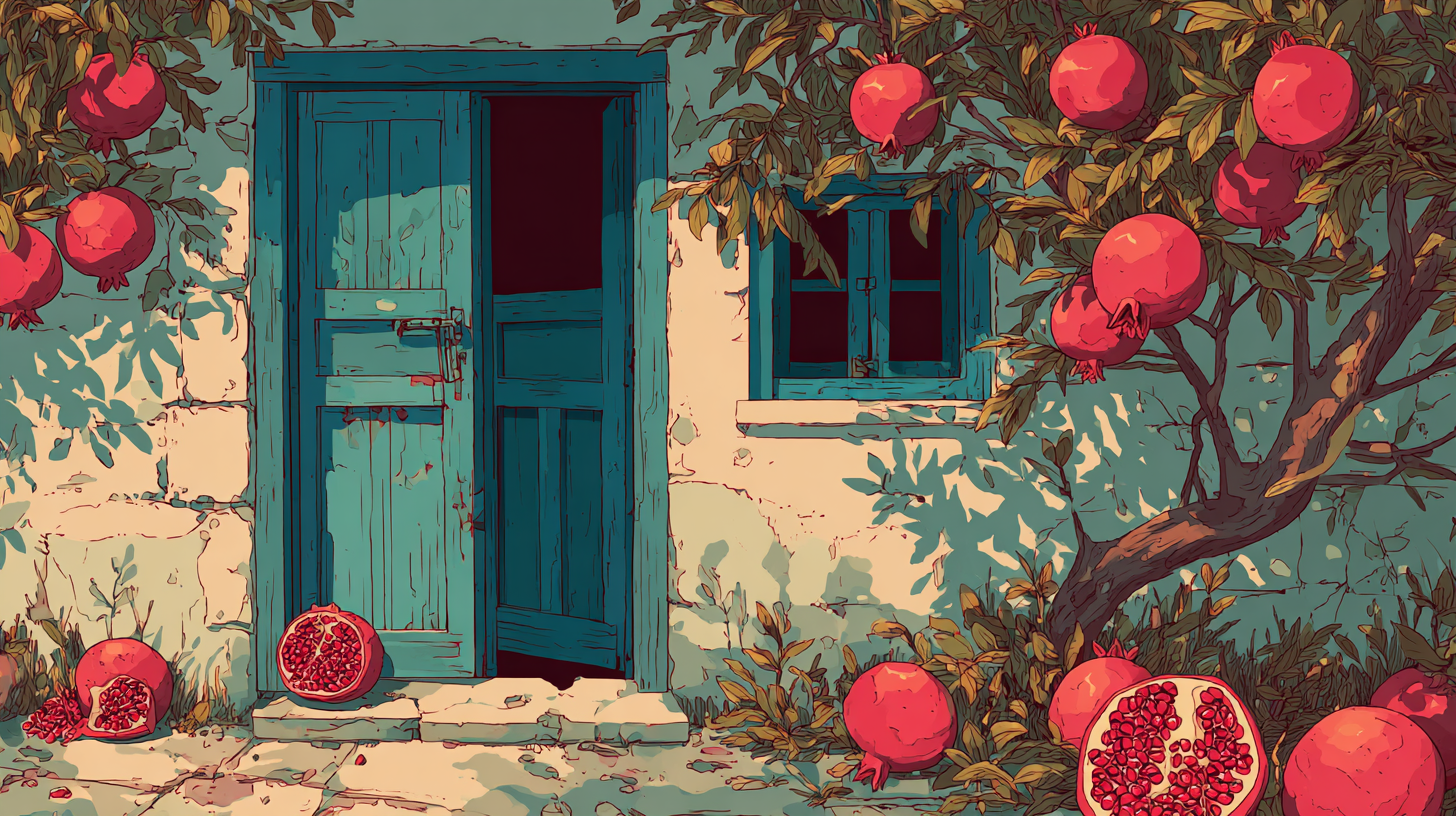
In modern Greek households, the custom unfolds either on New Year’s Eve or on New Year’s Day itself, depending on family tradition. In many homes, the family gathers outside the front door just before midnight. When the clock strikes twelve, a pomegranate — sometimes wrapped in cloth — is thrown forcefully against the doorstep or doorframe. The seeds scatter across the threshold, and with them, hopes for health, happiness, and abundance in the year ahead.
The rule is simple and poetic: the more seeds that spread across the floor, the luckier the year is believed to be.
In other homes, especially those following a more religious rhythm, the ritual takes place after attending church on New Year’s Day. The family dresses in their best clothes and attends the Divine Liturgy of Saint Basil. Traditionally, the man of the house carries a pomegranate to be blessed. Upon returning home, he knocks on the door and is deliberately the first to enter — a symbolic gesture meant to invite good fortune inside. Only then is the pomegranate broken, often at the doorway, accompanied by a spoken wish that the home be filled with as many joys as there are seeds in the fruit.
A Fruit of Life, Medicine, and Memory
The pomegranate’s symbolism is not only spiritual but practical. Rich in natural sugars, vitamins A, B, and C, and minerals such as potassium, iron, and phosphorus, it has long been valued for its nourishing and restorative properties. Ancient Greek physicians such as Hippocrates and Theophrastus wrote about the fruit’s medicinal uses, while Homer himself mentions pomegranate trees growing in the gardens of King Alcinous on the mythical island of Scheria in the Odyssey.
Today, the fruit continues to bridge the past and present. Greek cosmetic brands use pomegranate extract in skincare products, celebrating its antioxidant and anti-aging qualities — a modern echo of an ancient belief in its life-preserving power.
A Gesture That Carries a Wish
What makes the breaking of the pomegranate endure is not its spectacle, but its intention. It is a ritual rooted in hope, performed at the threshold between years, between what has been and what might still come. The act is brief, almost humble, yet it carries centuries of meaning — a reminder that prosperity is not summoned by words alone, but by shared moments, inherited gestures, and the quiet faith that the coming year can be generous.
In Greece, the New Year does not simply arrive. It is welcomed — seed by seed.
Did You Know?
The pomegranate has been a symbol of life, abundance, and renewal in Greece for more than 3,500 years. Archaeologists have found pomegranate motifs painted on funerary urns in Akrotiri (Santorini) and Phylakopi (Milos), while Minoan Crete and Mycenae produced jewelry and wall art inspired by the fruit. One of the most striking artifacts is a bronze pomegranate discovered on the Acropolis, now housed in the National Archaeological Museum of Athens — proof that the New Year’s ritual of breaking a pomegranate echoes a belief far older than the tradition itself.
Pomegranate Trivia You Might Not Know
The word pomegranate traces back to Latin and loosely translates as “the apple filled with seeds,” a poetic name that captures the fruit’s true nature long before anyone counted antioxidants. Although closely associated with the Mediterranean today, the pomegranate’s earliest roots lie further east, in a wide arc stretching from modern-day Iran to northern India, where it has been cultivated for thousands of years.
Despite its tough skin and regal appearance, the pomegranate is botanically classified as a berry. Each fruit hides hundreds — sometimes more than a thousand — jewel-like arils, which is precisely why so many cultures came to associate it with abundance, continuity, and prosperity. The trees themselves are remarkably resilient and long-lived, often producing fruit for well over two centuries.
In Greek mythology, the pomegranate appears in one of the most enduring stories explaining the rhythm of the natural world. Persephone’s consumption of its seeds in the Underworld bound her to Hades for part of the year, giving rise to the cycle of seasons — a myth that quietly links the fruit to both life and loss, growth and return.
The pomegranate’s symbolic reach extends far beyond Greece. It is mentioned in the Quran as one of the fruits of Paradise, and in some traditions it is even considered a candidate for the original forbidden fruit of Eden. Across cultures, it has carried meanings of sacred nourishment, renewal, and divine order.
On a more practical level, the fruit has earned its modern reputation as a nutritional powerhouse. Rich in antioxidants, vitamin C, vitamin K, fiber, and essential minerals, it has been used both as food and medicine for centuries. In kitchens around the world, pomegranates appear fresh, juiced, reduced into syrups such as grenadine, folded into sauces, paired with meats and cheeses, or used to bring brightness to festive dishes — including Mexico’s iconic chiles en nogada, where the fruit’s red seeds symbolize national identity.
And despite their ancient reputation, pomegranates are surprisingly patient fruits. Stored properly in a refrigerator, they can last for weeks — sometimes up to two months — waiting quietly to be broken open at just the right moment.
Pomegranates In Cretan Homes Today
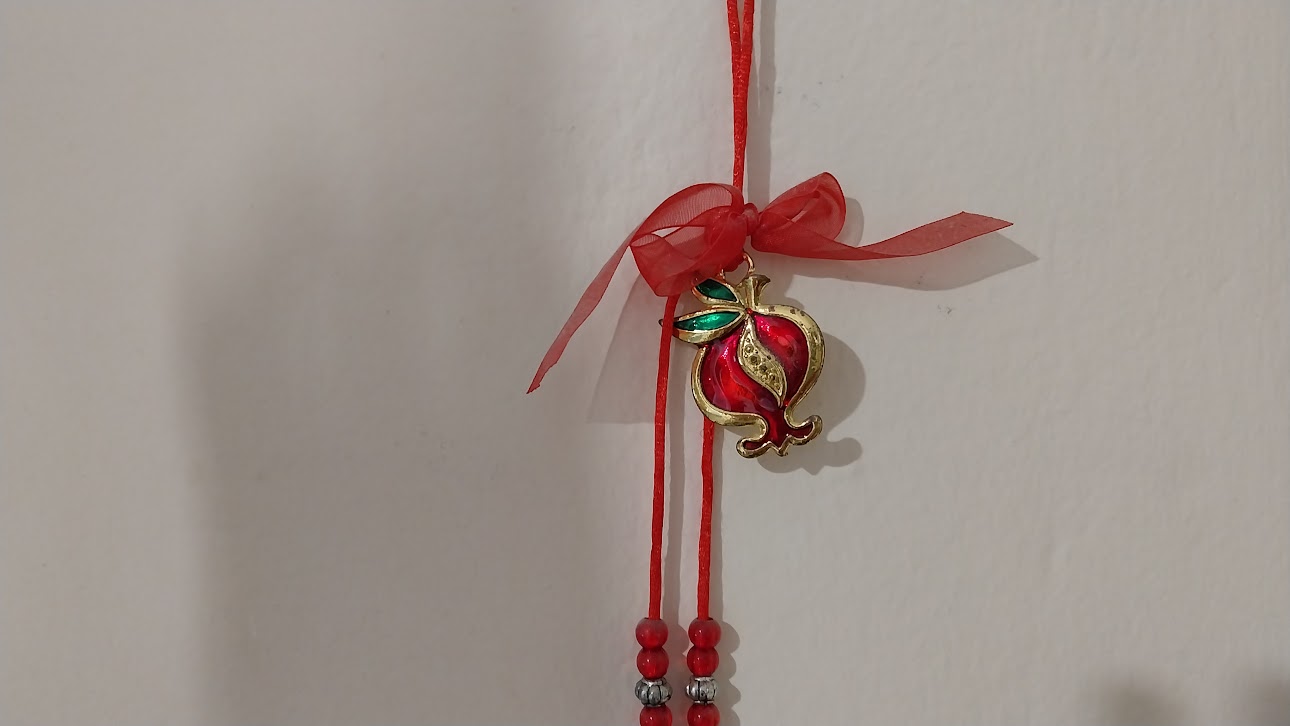
Today, the pomegranate has also stepped beyond ritual and into everyday Greek design. Walk into almost any shop, especially in Crete or the islands. You will find pomegranate-shaped souvenirs in countless forms: glazed ceramics, delicate jewelry, glass charms, wall hangings, and small decorative objects meant to be placed near doors or windows. The symbol appears just as easily on coffee cups, tote bags, kitchen towels, table linens, and even Christmas ornaments. These are not empty decorations. They reflect how deeply the pomegranate remains woven into Greek life — not as a museum relic, but as a living symbol of protection, abundance, and continuity that people still choose to surround themselves with, year after year.
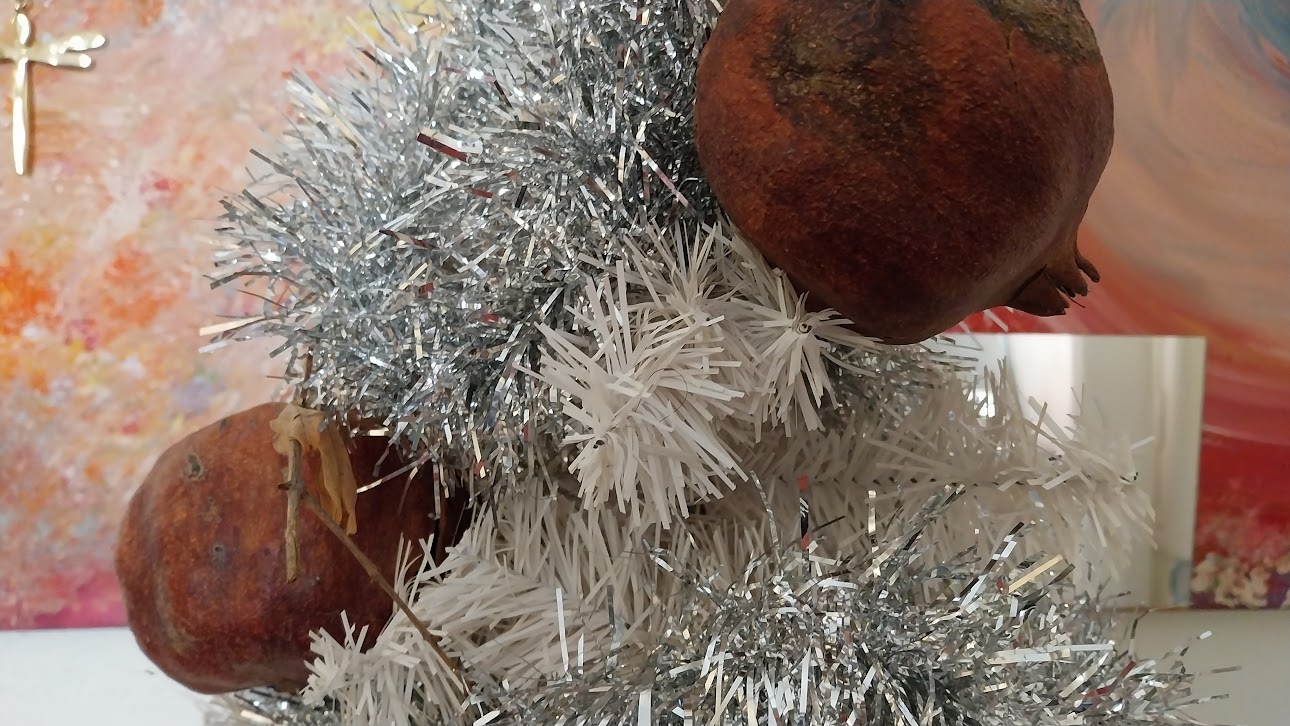
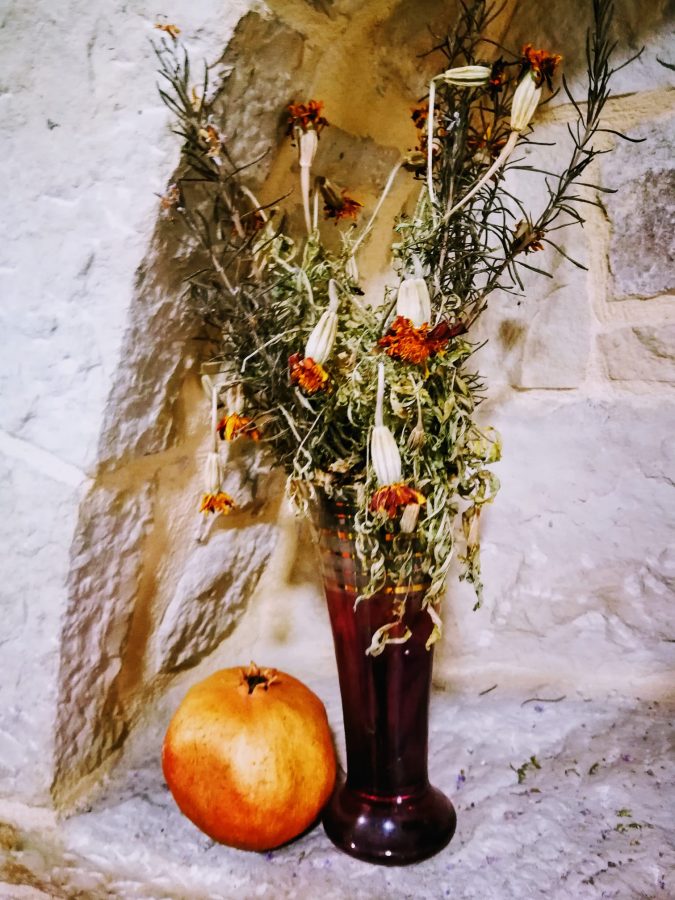
Dried pomegranates have a quiet dignity. Once the shine is gone and the skin tightens, they stop being food and become symbols — small, patient objects that carry the idea of abundance without shouting it. Hanging them on a Christmas tree feels almost instinctive: no glitter, no excess, just a reminder of continuity, fertility, and the hope that what looks dry on the outside still holds meaning.
In many Greek homes, especially older ones, the Christmas tree was never meant to dazzle. It was meant to protect. A dried pomegranate fits perfectly into that logic: it does not sparkle, but it watches. It does not promise luck loudly; it suggests it quietly.
Για την Κρήτη και για κάθε τόπο που ακόμη αναπνέει.
Argophilia — Independent. Unaligned. Always listening.
(For Crete, and for every place that still breathes.)
