- The Deputy Minister attended the Trekking Hellas anniversary event.
- Outdoor tourism is described as a strategic priority.
- Focus on sustainability and special tourism forms.
- The plan includes mountain tourism and year-round destinations.
When tourism officials speak about the future of the industry, the message rarely changes, even if the audience does.
At an event marking 40 years of Trekking Hellas, held at Technopolis City of Athens, Deputy Tourism Minister Anna Karamanli highlighted the importance of outdoor activities as a pillar of sustainable tourism development — a statement that has appeared in speeches, strategies, and conference panels often enough to sound almost ceremonial.
Still, the setting was appropriate. Trekking Hellas built its reputation on nature-based tourism, so praising outdoor travel as the future of tourism felt less like a surprise and more like tradition.
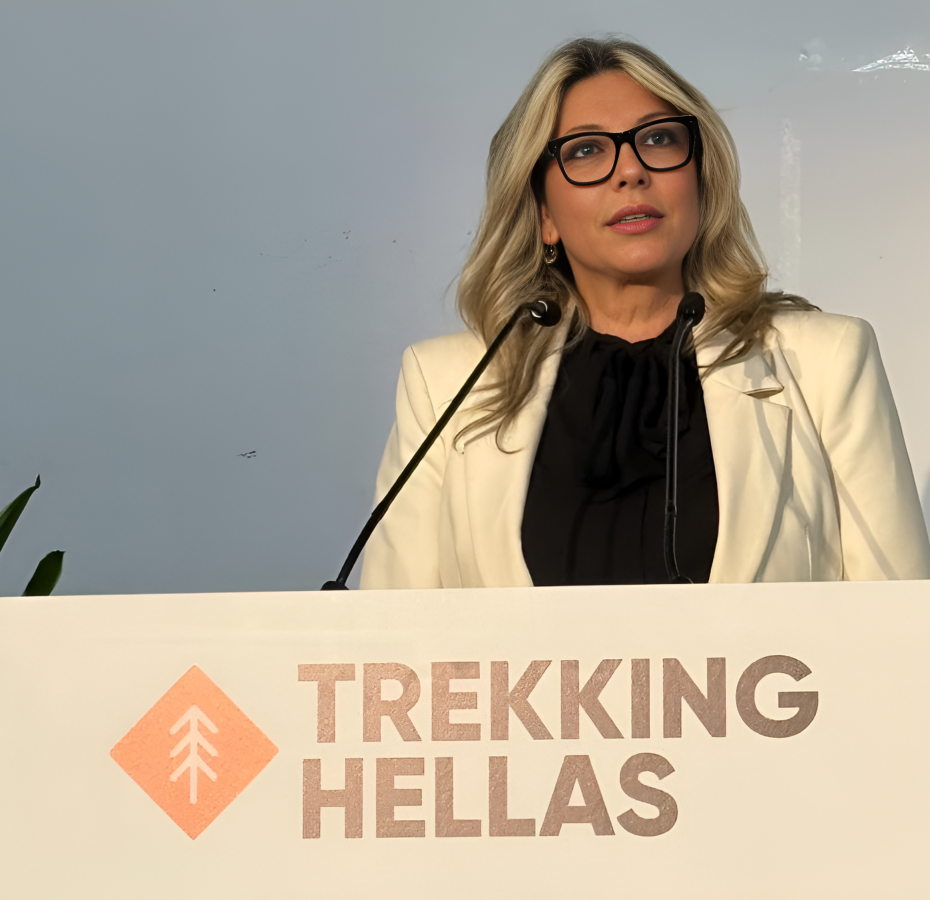
Nature Tourism Once Again Presented as the Answer
In her remarks, the Deputy Minister described activities in nature as a driving force for sustainable tourism, linking them to environmental protection, local development, and a more authentic travel experience.
“As part of tourism, activities in nature, whether as sport or recreation, are an important driver of sustainable tourism growth. They connect the tratraveler’sperience with the protection of the natural environment, the promotion of local resources, and the support of local communities,” she said.
For more than a decade, Greek tourism policy has repeatedly emphasized the same direction: less dependence on mass summer tourism and a greater focus on alternative forms such as hiking, sports tourism, and rural experiences.
The challenge has never been the idea — it has always been the execution.
Special Forms of Tourism Remain a Strategic Priority
Karamanli stressed that the development of so-called special-interest tourism remains central to the Ministry’s strategy, including outdoor and sports tourism.
“At the Ministry of Tourism, the development of special forms of tourism, including sports tourism and outdoor tourism, is a central strategic choice,” she noted.
Strategic choice is a phrase frequently heard in official presentations, usually followed by plans for infrastructure upgrades, regional development, and stronger promotion of lesser-known destinations.
The Ministry, she said, aims to support projects that will lead to a more sustainable and resilient tourism model, one that highlights authenticity while creating real opportunities for local communities. It is the kind of statement that fits almost any tourism conference, in almost any country, in almost any year.
Four-season Tourism Returns to the Agenda
The speech also touched on one of the most persistent goals in Greek tourism planning: extending the season beyond summer.
According to the Deputy Minister, the country aims to promote mountain destinations as year-round attractions, transforming ski resorts into year-round facilities. This includes:
- using lifts outside the winter season
- developing hiking and cycling routes
- expanding outdoor tourism infrastructure
- encouraging travel in spring and autumn
The idea has been discussed for years, especially as overcrowded summer destinations continue to struggle with resource pressure while mountain regions remain under-visited. Turning Greece into a twelve-month destination has long been the plan, but achieving it has proven slower.
Anniversary Event, Familiar Promises
The evening ultimately celebrated the long history of Trekking Hellas, one of the companies that helped introduce organized outdoor tourism to Greece long before sustainability became a fashionable word.
Karamanli congratulated the company on its four decades of activity and expressed hope that its work would continue to support the development of nature-based tourism in the years ahead.
The message matched the occasion perfectly: outdoor tourism is important, sustainability is necessary, local communities must benefit, and the future lies beyond the crowded summer beaches — all true, reasonable, and said many times before.
Which may explain why official speeches rarely sound surprising — not because they are wrong, but because the tourism industry has been hearing the same promises long enough to know that the difficult part comes after the applause.
