Crete, the Island where time still breathes.
The old man in the kafeneio had been stirring the same coffee for nearly ten minutes when I realized nobody in the room considered this unusual. Outside, a rusty pickup sat crooked beneath a plane tree in the village square while two dogs slept in a patch of drifting sunlight. Somewhere farther up the mountain slope, hidden among stone houses and grapevines, church bells folded softly into the mountain air. Nobody appeared rushed. Nobody seemed especially concerned with the hour. A younger man entered the café, greeted every single person individually, ordered a coffee, and immediately sat down without once glancing at a phone. The conversation simply widened to include him.
In much of the modern world, this scene would feel almost rebellious. We live now inside systems obsessed with speed, efficiency, productivity, and optimization. Meals are compressed into schedules. Conversations compete against notifications. Silence itself has become uncomfortable for many people. Yet here in Crete, especially away from the polished tourist corridors and curated resort landscapes, fragments of an older human rhythm still survive. Not perfectly. Not romantically. But unmistakably. The island remains one of the few places in Europe where life often still feels arranged around human beings rather than around systems.
Meals, Memory, and the Human Scale
Crete does not reveal itself immediately. Visitors arriving in summer frequently encounter only the outer skin: beach clubs, rental cars, sunbeds, cruise traffic, and Instagram tavernas glowing beneath decorative lanterns. But the deeper island still exists beneath all of that, especially in winter, in mountain villages, in roadside cafés, in conversations that stretch without purpose or transaction. Driving across Crete is like crossing several different countries stitched together by geology and memory. One moment you are passing olive groves older than most nations, and then you are threading through harsh mountain passes where shepherds still move flocks beneath enormous skies. Then, suddenly, the road descends toward hyper-modern tourist developments, where glass villas rise above coastlines once occupied only by fishermen and the wind. Crete contains all these layers simultaneously. Venetian harbors, Ottoman echoes, German occupation scars, Minoan ruins, Soviet-looking apartment blocks from the economic boom years, abandoned villages reclaiming silence. The landscape itself teaches continuity. Mountains dominate nearly every horizon on the island, and mountains shape people differently than flatlands do. They produce stubbornness, regional identity, suspicion toward centralized authority, and fierce attachment to place. Even today, many Cretans still speak about villages, family histories, and local loyalties with an intensity that feels increasingly rare elsewhere in Europe.
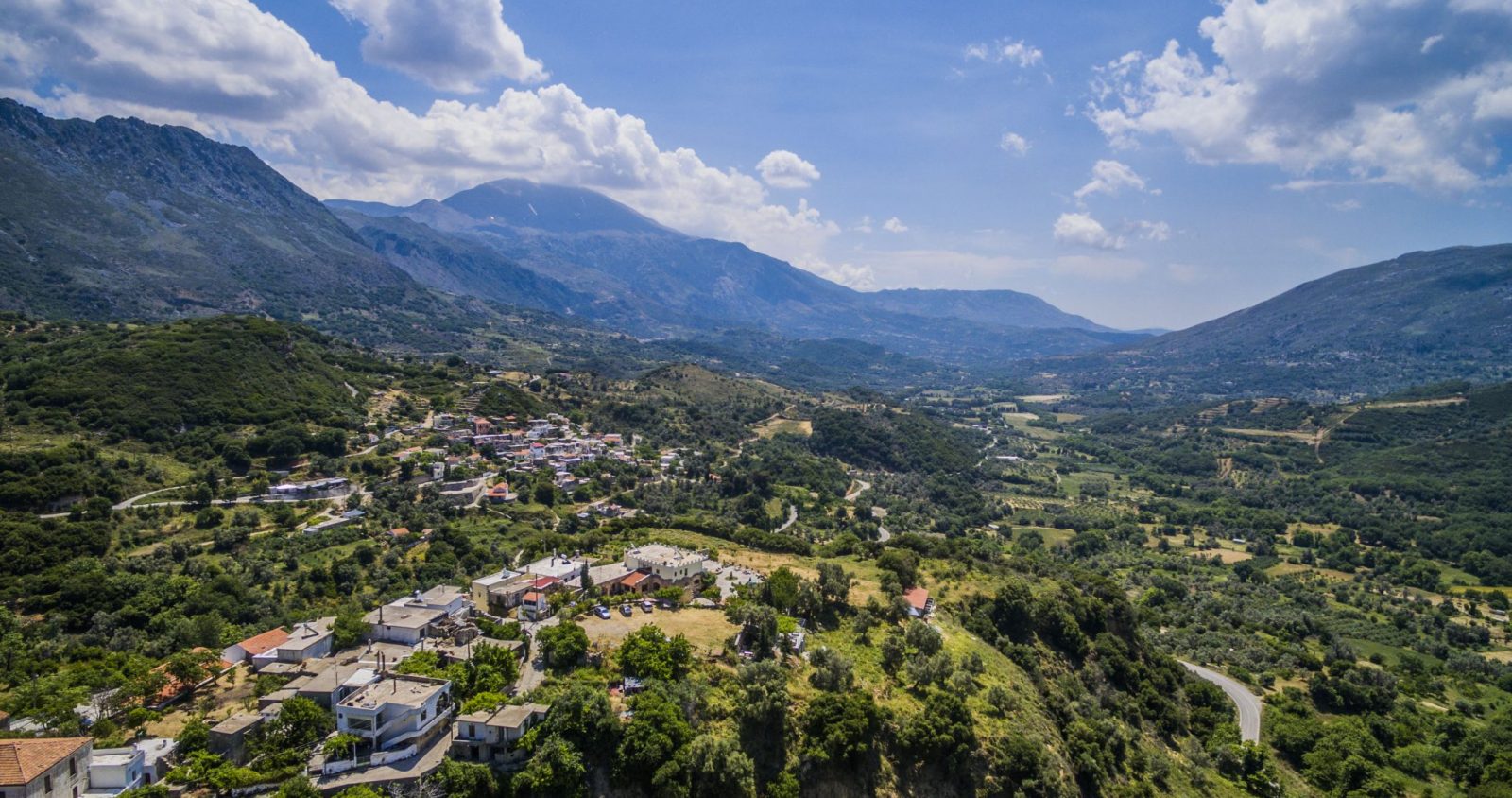
One of the first things foreigners notice in Crete is that meals still function as social rituals rather than fuel stops. A lunch can easily become a four-hour event without anyone considering it indulgent. Plates arrive gradually. Wine appears unasked for. Somebody’s grandmother sends over extra food from the kitchen. Conversations branch and circle and restart themselves. In much of the industrialized world, restaurants have become carefully calibrated machines designed around table turnover and efficiency metrics. In Crete, especially outside heavily commercial zones, tavernas often still feel like extensions of the household. People linger because lingering itself remains part of the experience. There is an old human truth hidden inside this rhythm: people require unstructured time together to remain emotionally healthy. Modern systems rarely allow for that anymore. In cities across Europe and America, loneliness has become epidemic even as populations grow denser and digitally connected. Meanwhile, on a mountainside in Crete, three old men can still spend half a day arguing politics beneath a vine-covered terrace while children drift in and out of the conversation and a dog sleeps beside the table. Nothing is monetized about the moment. Nobody is performing productively. Life simply unfolds at human scale.
This slower rhythm does not mean Crete is frozen in amber. The island has suffered enormously during Greece’s long economic crises. Young people struggle with housing costs and seasonal employment. Entire villages have aged dramatically as younger generations move toward cities or abroad searching for opportunity. Tourism, while economically essential, increasingly pressures local culture and infrastructure. Foreign investors buy coastal property at prices unimaginable to many locals. Bureaucracy remains legendary. Corruption exists. Development battles erupt constantly, especially when ancient landscapes collide with modern commercial ambitions. Crete is not paradise, and most Cretans themselves would laugh at outsiders attempting to romanticize it too heavily. Yet despite all this pressure, the island still retains something the modern world is rapidly losing: continuity between generations. Elderly people remain visible in daily life here. They sit in cafés, tend gardens, walk village roads, argue loudly at markets, and occupy public space naturally rather than being socially hidden away. Children grow up around grandparents. Stories travel orally across tables and courtyards. Skills and habits pass down almost unconsciously. In many Western societies, generations increasingly live separated from one another both physically and psychologically. The result is often cultural amnesia. Crete, for all its tensions and contradictions, still remembers how interwoven human communities are supposed to feel.
The Quiet Wisdom of Enough
Perhaps what Crete understands best is something dangerously simple: the difference between living and consuming. Much of modern life now operates inside permanent dissatisfaction. Entire economies depend upon convincing people they are incomplete without constant upgrades, constant movement, and constant acquisition. More followers. Better branding. Faster schedules. Bigger houses. Newer devices. More optimized lives. Crete resists this logic in subtle ways. Not completely, of course. The island has shopping malls, luxury developments, influencer culture, and all the usual machinery of modern aspiration. But underneath those newer layers, another philosophy still survives. A coffee beside the sea can still count as a meaningful afternoon. A family gathering can still outweigh business networking. A village festival can still matter more than a digital spectacle. Some of the happiest moments in Crete remain almost absurdly simple: swimming in cold water beneath a burning August sky, eating tomatoes that actually taste alive, sitting beneath plane trees while mountain wind moves through the square, hearing distant goat bells in the evening. These are not grand experiences by modern standards. They do not scale well online. Yet they nourish people in ways increasingly difficult to quantify. The island still remembers that a human life does not necessarily become richer by becoming faster.
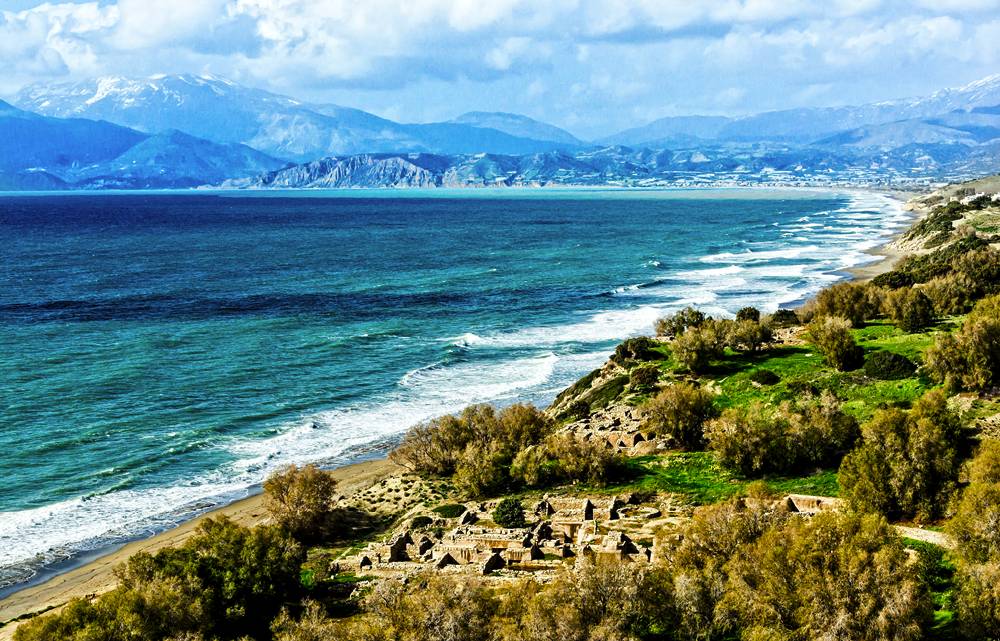
Late in the evening, after the heat finally loosens its grip on the stone walls and roads, villages across Crete begin quietly reassembling themselves outdoors. Chairs appear in alleyways. Families drift toward cafés. Children reclaim the squares. Old men resume conversations paused earlier in the day as if no time had passed at all. Somewhere above the coast, mountains fade into blue shadow while the smell of grilling lamb and wood smoke settles into the air. In those moments, it becomes easier to understand why so many visitors return to Crete again and again despite economic troubles, difficult infrastructure, or growing commercialization. People are not merely returning for beaches or weather. They are returning for contact with a way of being human that feels increasingly endangered elsewhere. Crete still carries the memory of older rhythms. It still understands that conversation matters, that landscapes shape souls, that meals are rituals, that old people belong among the living, and that sometimes enough really is enough. The modern world has forgotten many of these truths in its rush toward abstraction and acceleration. But here on this hard, beautiful island at the edge of Europe, they continue stubbornly breathing beneath the olive trees and mountain winds, waiting for anyone willing to slow down long enough to notice them.
