The travel industry is witnessing a surge in AI adoption, with major players vying to leverage the latest technologies to enhance guest experiences, streamline operations, and position themselves in the emerging AI wars. This roundup examines four recent developments: Choice Hotels’ partnership with AWS, TripAdvisor/Viator’s integration with Anthropic and Amazon Alexa, Hyatt’s enterprise deployment of ChatGPT, and Virgin Atlantic’s innovative application of ChatGPT. The big question at this point is, “Is AI in travel and hospitality currently more communicative than operational?”
Choice Hotels Leverages AWS – Hype vs. Reality
The Stated Value: Choice Hotels is positioning its partnership with AWS as a revolutionary step towards personalized guest experiences, streamlined operations, and data-driven decision-making. The promise is a new standard for hospitality innovation.
Key Components: Generative AI Models (AWS), Choice Hotels Data, Phased Rollout.
The Real Value (Potentiality): While the stated value is ambitious, the real value lies in the potential for incremental improvements in guest satisfaction and operational efficiency. The true impact will depend on the quality of the data, the effectiveness of the algorithms, and Choice Hotels’ willingness to adapt its processes. The most significant potential lies in the long-term ability to anticipate guest needs and optimize resource allocation, but this remains largely speculative at this stage. The partnership also serves as a powerful marketing tool, enhancing Choice Hotels’ brand image and attracting tech-savvy travelers.
Bottom Line: A promising initiative with the potential to enhance the guest experience and improve operational efficiency, but the transformative impact remains to be seen. We visited Choice Hotels’ website and could not find any current deployment. An interesting side note here is the claim via Fox News in 2023 by Choice Hotels that their entry into the AI game for years now, only they were being careful! Choice was also the first to offer toll-free reservations by phone too.
TripAdvisor/Viator Integrates Anthropic & Amazon Alexa – Hype vs. Reality
The Stated Value: TripAdvisor and Viator are aiming to revolutionize travel planning and discovery through AI-powered conversational experiences, leveraging Anthropic’s Claude model and Amazon Alexa. The promise is a more intuitive and personalized way to explore destinations and book experiences.
Key Components: Anthropic’s Claude AI, Amazon Alexa, Viator’s experience marketplace, and TripAdvisor’s travel content.
The Real Value (Potentiality): The integration offers the potential to simplify travel planning and provide more relevant recommendations. However, the success hinges on Claude’s ability to understand complex travel queries and provide accurate, up-to-date information. The novelty of voice-based travel planning may also be a limiting factor, as many users still prefer traditional search methods. The partnership represents a strategic move to capture a share of the growing voice commerce market. As noted in our earlier analysis, the current iteration shows a tendency toward overly enthusiastic and sometimes inaccurate recommendations, highlighting the challenges of applying generative AI to complex travel-planning scenarios.
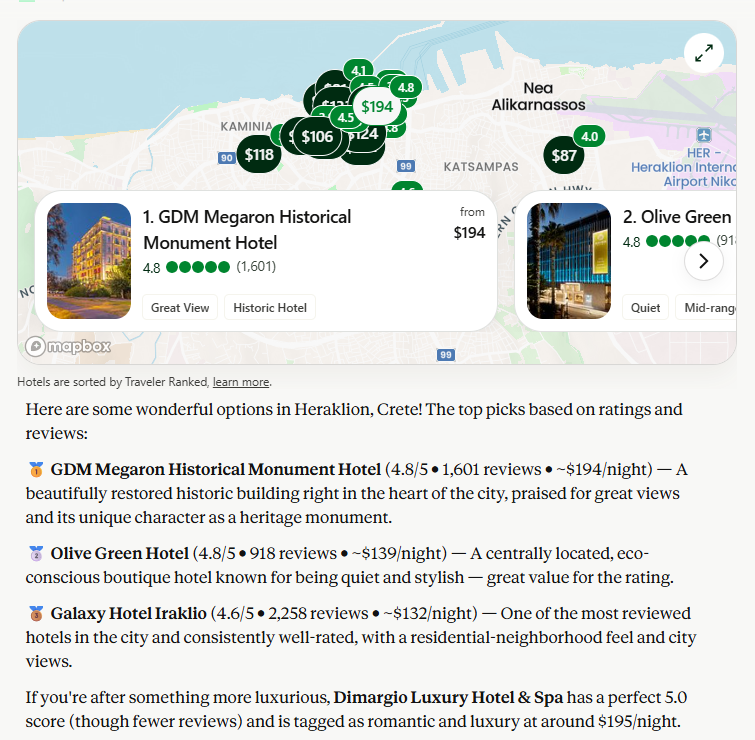
Bottom Line: A promising experiment in conversational travel planning, but its long-term impact remains to be seen. The value proposition depends on Claude’s performance and the adoption rate of voice-based travel planning. The image below shows a short list of “connectors” that Claude can access.
Hyatt Embraces ChatGPT – Hype vs. Reality
The Stated Value: Hyatt is deploying ChatGPT Enterprise across multiple departments, including finance, marketing, and operations, to enhance efficiency, personalize guest interactions, and accelerate development cycles. The stated goal is to equip teams with advanced tools to deliver more responsive and impactful service.
Key Components: OpenAI’s ChatGPT Enterprise, Hyatt’s internal data and workflows, integration across multiple platforms, Microsoft, and Anthropic agentic platforms.
The Real Value (Potentiality): Hyatt’s two-year investment in “AI enablement” and the execution of four “large-scale agentic platforms” suggest a more strategic and comprehensive approach than initially indicated. The deployment of ChatGPT Enterprise for content creation, communications, and application development demonstrates a commitment to leveraging AI across various operational functions. The longitudinal data showing increased booking conversion rates and revenue per booking, as highlighted by CEO Mark Hoplamazian, provides tangible evidence of the potential value of AI-powered search. Hyatt’s licensing agreements with Microsoft and Anthropic further underscore its commitment to exploring a diverse range of AI solutions. The move mirrors similar deployments by companies like Skyscanner, indicating a broader industry trend.
Bottom Line: Hyatt’s ChatGPT integration represents a significant, strategically driven investment in AI, with demonstrable early successes in search and broader potential for operational efficiency and personalization. While data privacy and brand consistency remain crucial considerations, Hyatt’s proactive approach and commitment to longitudinal data analysis position it favorably in the evolving landscape of AI-powered hospitality. [Part of this roundup section came from ChatGPT instance HAL]
Virgin Atlantic Takes Off with ChatGPT – Hype vs. Reality
The Stated Value: Virgin Atlantic is leveraging ChatGPT to revolutionize its customer service, empowering cabin crew with real-time information and enabling passengers to access personalized support through a new chatbot. The promise is a more efficient and engaging travel experience.
Key Components: OpenAI’s ChatGPT, Virgin Atlantic’s operational data, cabin crew devices, and passenger-facing chatbot.
The Real Value (Potentiality): Virgin Atlantic’s approach is notable for its focus on empowering frontline employees with AI-driven insights rather than relying solely on automated chatbots. The integration with cabin crew devices allows for real-time access to passenger information and operational updates, potentially enhancing service quality and responsiveness. The passenger-facing chatbot offers a convenient channel for addressing inquiries and resolving issues. The strategic deployment of AI to support cabin crew represents a potential competitive advantage, allowing Virgin Atlantic to maintain its reputation for exceptional service while improving operational efficiency.
Bottom Line: Virgin Atlantic’s ChatGPT integration is a strategically valuable initiative that has the potential to enhance both customer service and operational efficiency. The focus on empowering frontline employees and providing real-time support positions Virgin Atlantic favorably in the evolving landscape of AI-powered travel.
Virgin Focus: Strategic Positioning and the Promise of AI-Powered Service
Beyond the immediate benefits of enhanced customer service and operational efficiency, Virgin Atlantic’s ChatGPT integration appears to be a strategically timed move to solidify its position as an innovator in the travel industry. The announcement, coupled with the ongoing development of AI-powered tools for cabin crew, signals a commitment to embracing emerging technologies and shaping the future of air travel.
The press release serves a dual purpose: establishing a presence in the rapidly evolving AI landscape and laying the foundation for future announcements and media coverage. The rollout of AI-powered tools, while still in its early stages, allows Virgin Atlantic to build momentum and generate excitement around its digital transformation initiatives.
The focus on empowering frontline employees with AI-driven insights is particularly noteworthy. This approach not only enhances service quality but also reinforces Virgin Atlantic’s commitment to its core values of human connection and personalized experiences. The integration of ChatGPT into cabin crew workflows represents a subtle yet significant shift, moving beyond automated chatbots to a more holistic, human-centric approach to AI implementation.
Virgin Atlantic is using strategic positioning to capitalize on the growing consumer interest in AI and establish itself as a leader in the next generation of travel experiences. Expect similar announcements from competitors soon.
Overall Trend: The travel industry is aggressively pursuing AI adoption, but the long-term success of these initiatives hinges on a realistic assessment of the technology’s capabilities and limitations. The focus must shift from hype to tangible value creation, ensuring that AI enhances the guest experience without compromising privacy or accuracy. The most successful implementations will likely be those that prioritize human augmentation and strategic integration rather than wholesale automation. The AI Hospitality Alliance newsletter serves as a valuable resource for tracking these developments and understanding the evolving landscape of AI in travel.
