Greece’s first nationwide count of dog-bite incidents landed quietly in inboxes this week, reporting 2,820 people who sought medical care in 2023. It is a striking number at first glance — one that can easily be used to fuel fear, blame, or calls for hasty regulation.
But for anyone who understands dogs, behavior science, or the reality of animal-human interaction in Greece, the statistic raises a different reaction entirely:
What is missing from this report is more important than what it contains.
The data list rates per region, seasonal peaks, anatomical injury locations, and age groups.
What they do not include is the context that explains why these incidents occur — and why dogs are almost never the true cause of them.
Dogs Never Bite Without a Reason — But Statistics Never Say That
The EODY report notes:
- 2,820 total cases
- a national rate of 26.9 per 100,000 residents
- peaks in warm months
- 63% involving a single bite
- 51% involving the lower limbs
- children bitten mostly on head/neck
- owned and stray dogs responsible in nearly equal numbers
But none of these numbers tell the story behind the bites.
They simply count the consequences — not the causes.
And that is the failure of the dataset.
For people who spend time with dogs, especially in Crete, one fact is clear:
Dogs give six warnings before they ever use their teeth.
Humans miss all six.
A bite is never random, never malicious, never without reason.
It is communication — the last option in a chain of ignored signals.
What the Report Doesn’t Say: Human Behavior Causes Most Bites
Most dog bites occur because humans:
- pet unfamiliar dogs without consent
- bend over them (a dominance threat in dog language)
- approach sleeping dogs
- interfere during feeding
- ignore stiff posture, freezing, growling
- allow children to climb, hug, or grab
- move unpredictably
- smell like alcohol (yes — this is scientifically significant)
The official report says nothing about these triggers.
Yet they are the foundation of bite prevention.
The Alcohol Factor: Missing, but Crucial
Professionals know it.
Dog trainers know it.
Animal behaviorists know it.
Any Cretan who has spent time with strays knows it.
Dogs often react defensively to humans who smell like alcohol.
Why?
- The scent is sharp and unnatural
- Drunk humans move unpredictably
- Past trauma: many strays have been mistreated by intoxicated people
- Dogs interpret the smell as a threat signal
But the report avoids this conversation completely — even though Greek strays are highly scent-driven and extremely sensitive to human behavior.
Without acknowledging alcohol-related triggers, any policy that follows will be misguided.
Strays vs. Owned Dogs: The Different Stories Behind the Numbers
The report notes that strays and owned dogs are equally represented, but the motivations are not the same.
Strays bite adults
Usually because:
- adults invade space
- adults try to pet unfamiliar dogs
- adults ignore warning signals
- adults have food
- adults are intoxicated
- adults startle resting animals
These are defensive bites, not aggressive ones.
Owned dogs bite children
Because children:
- approach dogs unpredictably
- hug tightly
- take toys
- grab fur
- scream or run
- go face-to-face
These bites reflect supervision failure, not canine malice.
But again, the report does not mention any behavioral explanation.
Policy Reactions: Muzzles Are Not the Answer
When statistics like these circulate without context, the reaction is predictable:
“Make all dogs wear muzzles.”
This is neither humane nor scientifically justified.
A muzzle is:
- a tool for specific cases
- NOT a default
- NOT a solution to human misunderstanding
- potentially abusive when unnecessary
- dangerous in warm climates (dogs cannot pant normally)
- a source of stress that can increase defensive reactions
Blanket muzzling punishes dogs for behaviors rooted in human mistakes.
What Actually Reduces Dog-Bite Incidents
If Greece wants to reduce dog bites — truly reduce them — the approach must be modern, humane, and evidence-based:
✔ Teach dog body-language literacy
One poster in every municipality could prevent hundreds of bites.
✔ Public campaigns on safe interaction
Especially for tourists and children.
✔ Address alcohol-related triggers
This alone could drastically reduce adult bite incidents.
✔ Support proper training and socialization
A confident dog is a safe dog.
✔ Humane stray management
Stable, healthy dogs are less reactive.
A muzzle, on the other hand, solves none of these root causes.
What This Statistic Really Shows
Not that Greece has an “aggressive dog problem.”
But Greece has:
- an education problem,
- a supervision problem,
- and a communication problem.
Dogs react logically.
Humans interpret emotionally.
Reports count numbers but omit meaning.
And meaning is everything when we live alongside animals.
A Call for Better Reporting — and Better Understanding
Dog bites are serious, and the people affected deserve care and acknowledgement.
But dogs deserve fairness too — and fairness requires context, not fear.
The next time numbers like these appear in our inboxes, they should come with the information that truly matters:
- Why bites happen
- How to prevent them
- How to read canine signals
- What triggers to avoid
- How human behavior shapes outcomes
Because counting incidents without understanding them is not public health.
It is public confusion.
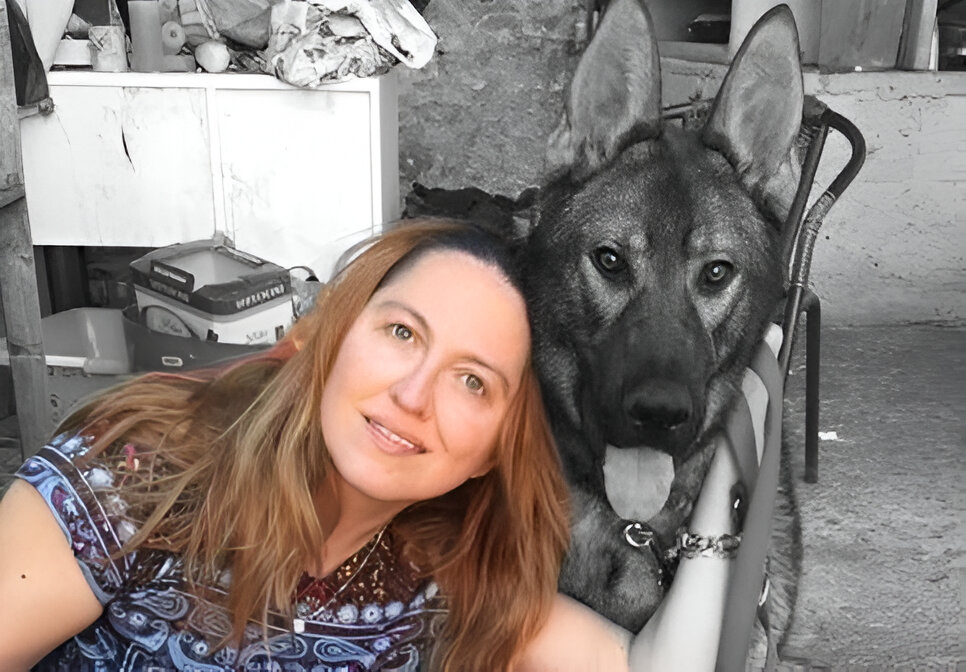
I once had a German Shepherd named Rambo — a dog with a voice like thunder and the gentlest heart I have ever known. He struggled with a mental illness, something rare and difficult in animals, but he never hurt anyone. Not once. We even had a tiny pet bunny for my son Paul, and Rambo treated that rabbit as if it were made of glass. He would lie beside the cage, ears relaxed, eyes soft, guarding a creature he could have harmed with a single careless movement — but never did.
Rambo taught me something essential about animals: kindness is not the absence of struggle; it is the choice they make despite it.
