- Crete launches a new cycle of hands-on actions celebrating wild greens (horta).
- The programme runs across the Chania Regional Unit from January to April 2026.
- More than 120 edible wild greens grow naturally on the island.
- Local associations, guides, and communities lead the experience
- For the first time, schools also take part.
- The project is part of Crete: European Region of Gastronomy 2026.
In Crete, food does not always begin at the market. Sometimes, it begins with a small knife, a quiet slope, and someone older than you pointing at the ground. That quiet knowledge — how to recognise, gather, and cook wild edible greens, known locally as horta — is now back in focus through a series of actions organised by the Region of Crete – Chania Regional Unit, in collaboration with local cultural associations across the prefecture.
The initiative forms part of the Crete European Region of Gastronomy 2026 and does not seek to reinvent tradition. It simply invites people to step back into it.
A Landscape You Can Eat
Crete is one of the world’s richest regions for wild greens.
More than 120 different edible species grow naturally across the island — a number that still surprises visitors, and occasionally locals too.
For over 2,500 years, these greens have never left the Cretan table. They were not a trend, not a detox, not a lifestyle choice. They were having lunch.
Boiled with olive oil and lemon, mixed into pies, or eaten as a main meal, not an afterthought.
From the Hills to the Table
After strong participation in previous years, the programme returns in 2026, expanded and more confident. This time, 22 local associations will host experiential activities in 15 different locations across the Chania Regional Unit.
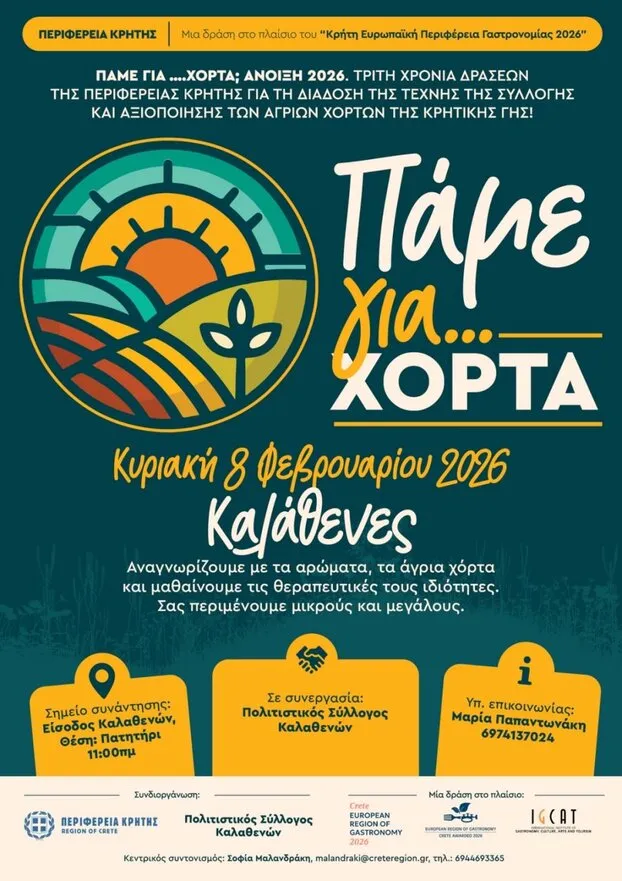
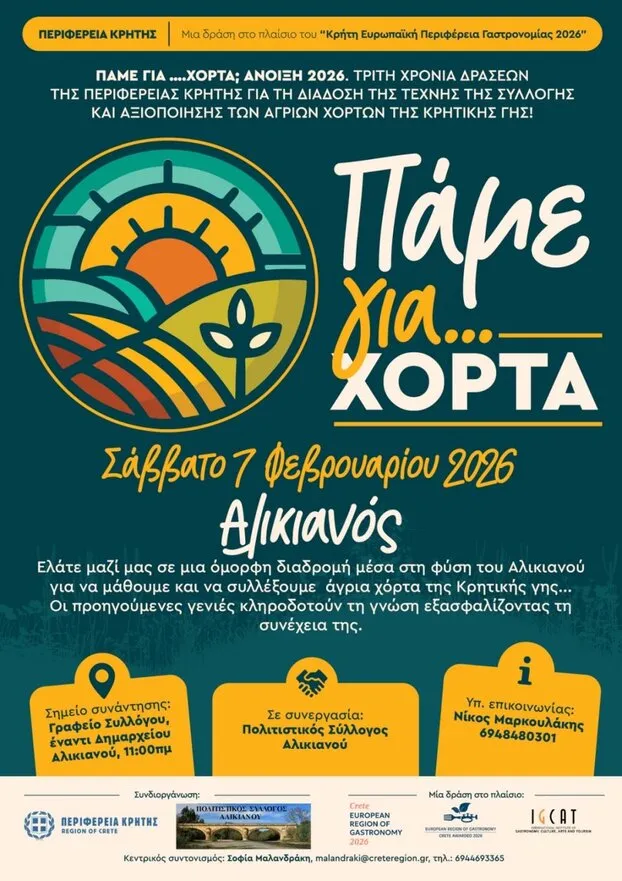
From January 31 until April 2026, participants will head out into the countryside with local guides who know the land — not from books, but from repetition.
The activities focus on:
- recognising edible greens
- understanding their names (which change from village to village)
- learning when and how to collect them
- and, just as importantly, learning when not to
Respect for nature runs through the entire programme. The goal is not to harvest everything, but to ensure the land continues to give — quietly — to the next generation.
A First Step Into Schools
For the first time, the programme also enters secondary education, in collaboration with the Directorate of Secondary Education.
Students and teachers are invited to take part in guided outdoor experiences, exchanging classrooms for hillsides and learning directly from local communities. It is education without screens, without rush, and with dirt on your hands — the good kind.
Each local association shapes the activity it hosts in its own way. Some add cooking, others stories, long tables, and conversation. That is the point.
The shared experience — people from different parts of Crete meeting, comparing names, uses, and habits around wild greens — strengthens something older than gastronomy: community.
So, bring a knife to forage horta, and follow the people who still know how to read the ground.

[…] that one suspects olive oil will soon require a mission statement. Extra virgin olive oil. Wild greens. Graviera. Mizithra. […]