For three days in early March, the center of Vilnius stops looking like a capital city and becomes a living museum of Baltic tradition.
The Kaziukas Fair, held this year from March 6 to March 8, has once again taken over the Lithuanian capital, turning nearly five kilometers of central streets into one of the largest traditional craft markets in Europe. The event, which dates back centuries, is considered the biggest celebration of folk craftsmanship in the Baltic region and one of the oldest annual artisan fairs still running today.
More than 1,200 certified craftsmen, artists, and food producers are participating this year, filling the city with stalls, workshops, music, and the unmistakable smell of freshly baked local specialties.
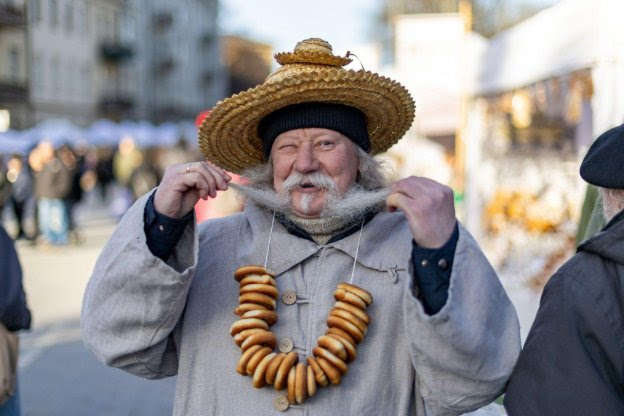
Wood, Fire, Clay, and Music in the Streets
Walking through the market feels less like shopping and more like stepping into another century.
Visitors find themselves surrounded by handmade glassware, ceramics, jewelry, leather goods, paintings, and sculptures. Blacksmiths work over open fires, potters spin their wheels, and musicians in traditional costume play Lithuanian folk melodies in the background.
The fair is not only about buying. Many stands allow visitors to try the crafts themselves, from weaving and pottery to baking the famous Lithuanian tree cake, a layered dessert prepared over an open flame.
Food is everywhere, and the aromas travel far beyond the stalls.
Local producers offer bread, smoked fish, sausages, sweets, and hot dishes served outdoors, including cepelinai, the well-known Lithuanian potato dumplings that are almost impossible to eat without sitting down.
Kaziukas Fair Represents the Whole Country
This year’s edition introduces new thematic areas highlighting Lithuania’s regional traditions.
The Dzyvų Alėja, or “Alley of Life,” on Cathedral Square brings together craftsmen and food producers from all five ethnographic regions of Lithuania — Aukštaitija, Samogitia, Sudauen, Suvalkija, and Lithuania Minor — creating a symbolic meeting point of the country’s cultural heritage.
Nearby, the Šventaragis Valley has been transformed into an interactive space where visitors can watch artisans at work and try traditional techniques themselves, guided by woodcarvers, blacksmiths, jewelers, and other masters of old crafts.
Events like the Kaziukas Fair remind visitors that even in modern European capitals, tradition still knows how to take over the streets — and for a few days, nobody seems to mind at all.
