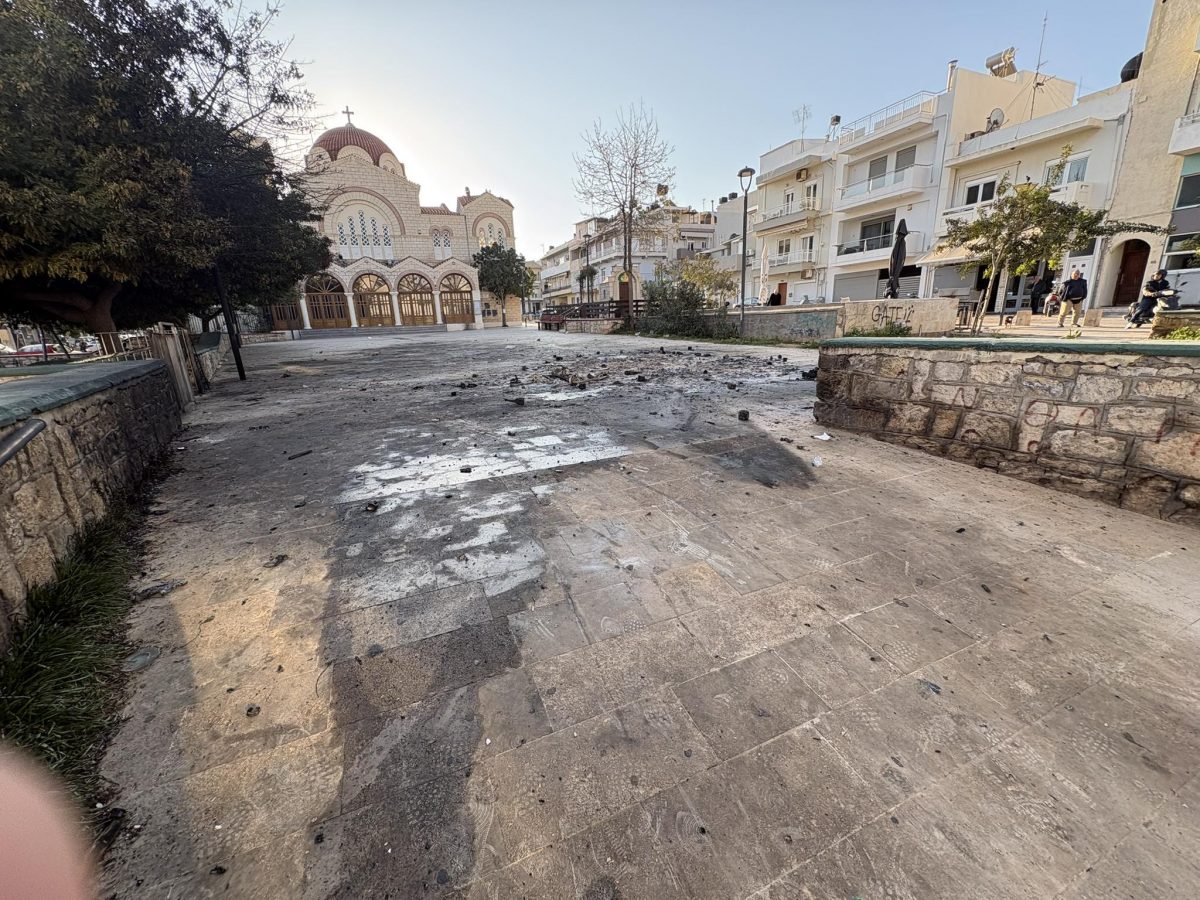
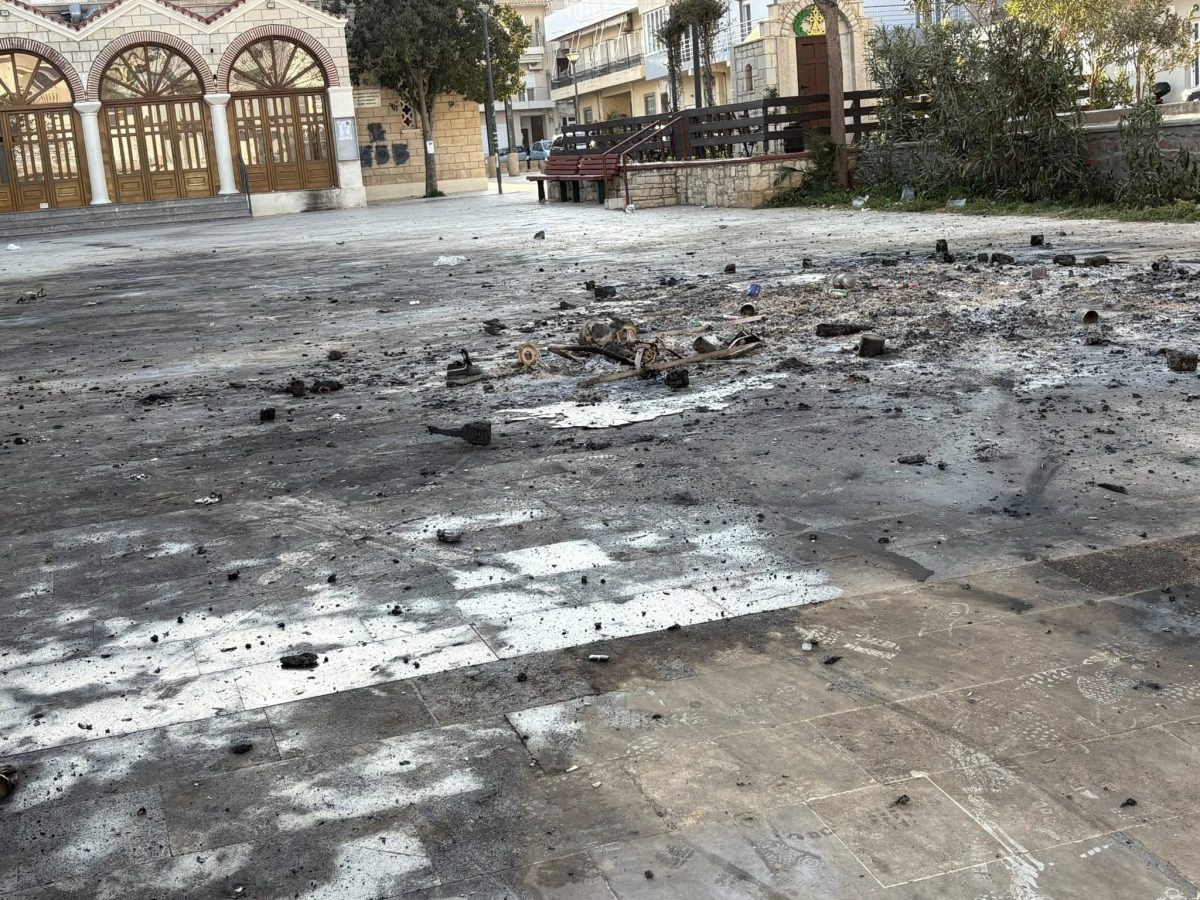
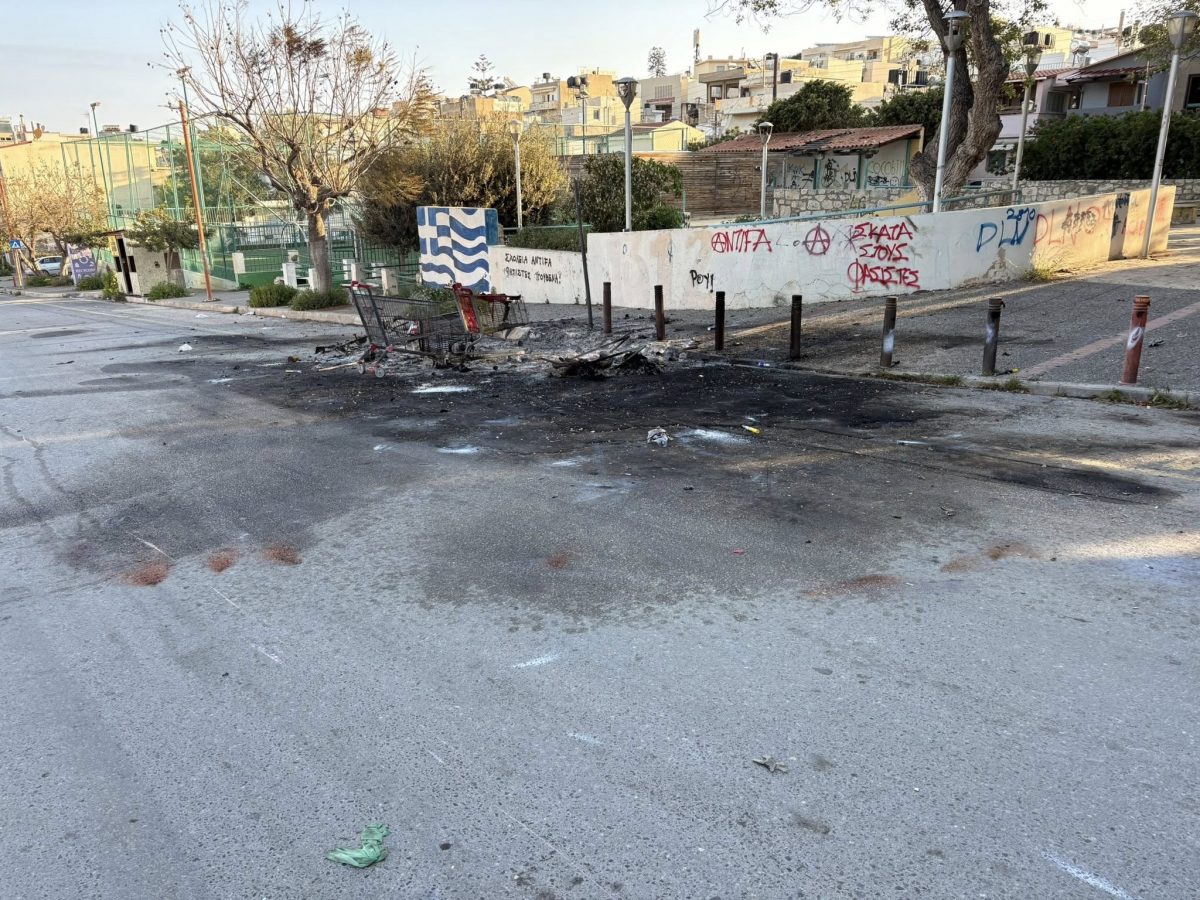
- Widespread Damage: Neighborhoods including Nea Alikarnassos, Kaminia, and Mastambas saw trees, traffic lights, and street lighting destroyed by fire.
- Explosives Found: Deputy Mayor Antonis Perisynakis reported finding gas canisters, Molotov cocktails, and even an improvised explosive device (IED) in public squares.
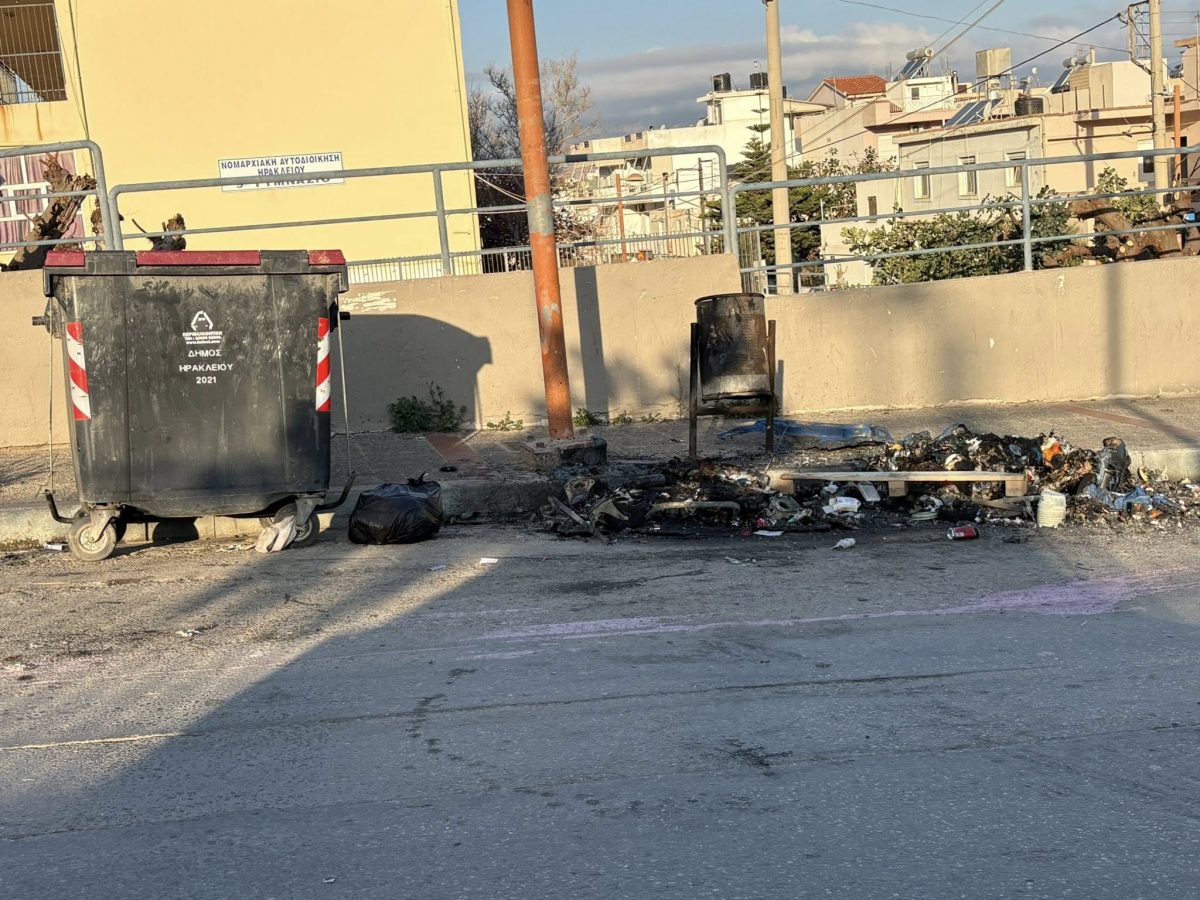
- Resource Drain: Municipal crews spent Holy Saturday clearing wood and palettes, only to spend Easter Sunday cleaning scorched asphalt and replacing missing waste bins.
- A Moment of Solidarity: In Agios Ioannis Chostos, migrant workers joined cleanup efforts to help restore the area after the night’s violence.
A Scorched Celebration
In Heraklion, the “Light of the Resurrection” took on a destructive meaning this year. What is traditionally a night of spiritual renewal turned into a spree of urban arson. In Nea Alikarnassos and several other districts, the dawn revealed a landscape of melted plastic bins, charred trees, and ruined traffic signals. This wasn’t the result of a stray firework, but a deliberate act of vandalism using “weaponized” holiday traditions.
The Tools of Destruction
Deputy Mayor Antonis Perisynakis expressed his outrage on social media, sharing images of the aftermath on Easter Sunday. His report is chilling: the fires weren’t just fueled by wood, but by gas canisters and Molotov cocktails. In one square, an improvised explosive device was discovered, highlighting a dangerous shift from “tradition” to criminal behavior:
“CHRIST IS RISEN – HAPPY EASTER
Unfortunately, in a city that’s been burned, right in front of every church. I wonder why? Yesterday, Holy Saturday, the city crews spent the whole day collecting wood and pallets ready for burning. Today, we see burned streetlights, trees, lamps, streets, asphalt, but mainly trash cans that are no longer there. As you will see, crews have been working since dawn to clean up the squares, but the destruction is extensive. How long will we remain mere bystanders and even put ourselves at risk from all these mindless individuals at the time of the Resurrection, when we reverently go to church? And why, I wonder, should the taxpayer foot the bill for all this destruction and vandalism? I am presenting representative photos from Nea Alikarnassos, Kaminia, Deilina, Poros, Katsamba, Mastaba, and Agios Ioannis Chostos. In all the photos, gas canisters, bottles (Molotov cocktails), and in some photos, an improvised explosive device. I should also note that in Agios Ioannis Chostos, migrants who are usually there looking for work helped clean up the area to some extent!”
The Cleanup and the Contrast
While the damage is significant, a story of unexpected solidarity emerged from the soot. In the area of Agios Ioannis Chostos, migrants—who often gather there in hopes of finding daily work—voluntarily assisted municipal crews in the early morning cleanup. It was a poignant reminder of community spirit in a neighborhood otherwise scarred by the night’s events.
The Fiscal Toll
- Infrastructure Lost: Dozens of waste bins (at roughly €300–€400 each), street lights, and traffic signals.
- Manpower: Round-the-clock shifts for municipal cleaning and fire services.
- The “Invisible” Cost: Asphalt damage from high-temperature fires often requires costly resurfacing.
Easter in Crete is a time of profound paradox. We celebrate the triumph over death while, in the streets of Nea Alikarnassos, we witness the senseless “killing” of the public space.