- The incident occurred on Sunday, December 7, 2025, during a winter descent in Aba Gorge, Asterousia Mountains, southern Crete.
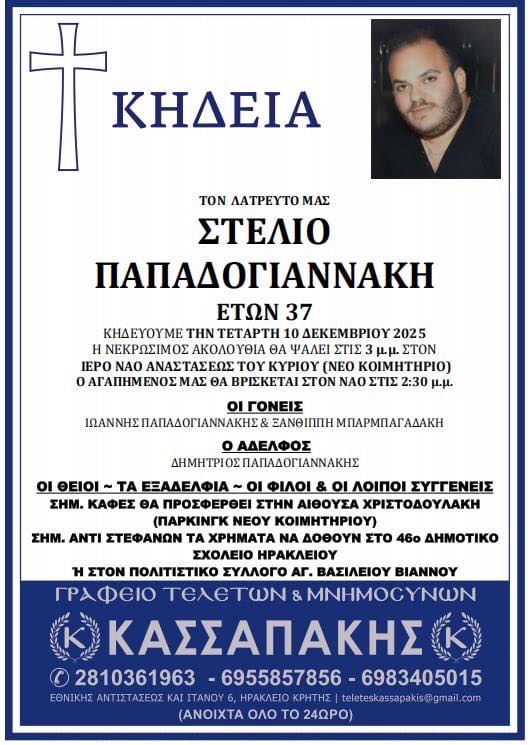
- The victim was Stelios Papadogiannakis, an experienced mountaineer and endurance athlete.
- He was part of a group, using technical equipment and ropes.
- Despite remaining conscious for hours, rescue was delayed by terrain, nightfall, and winter conditions.
- Air evacuation attempts failed.
- Stelios Papadogiannakis died more than 20 hours after the accident, still in the gorge.
- The case underscores that winter hiking, climbing, and canyoning in Crete can be fatal regardless of experience or preparation.
On December 7, 2025, a winter descent in the Asterousia Mountains ended in tragedy. Stelios Papadogiannakis, a highly experienced mountaineer and athlete with extensive involvement in mountain sports — including mountaineering and mountain cycling — lost his life after a fall during a technical descent in Aba Gorge.
The accident is estimated to have occurred at approximately 13:30 on Sunday, December 7, as Stelios Papadogiannakis was attempting to descend the waterfall in Aba Gorge together with other members of his group. During the descent, and for reasons that have not yet been fully clarified, he lost control of his equipment. It is estimated that he fell from a height of more than five metres.
According to one account, two distinct impacts were heard — one caused by the backpack striking the ground, and a second when the victim hit a ledge on the gorge wall. Another description suggests that he was violently arrested by the rope, regained consciousness shortly afterwards, and managed to complete the descent to the ledge independently. He was then assisted by a member of his group and transported to the base of the waterfall.
As daylight faded, winter conditions took over. Cold, darkness, and the complex terrain of the gorge turned evacuation into a prolonged and uncertain effort. Air rescue was attempted but could not be completed. Ground teams worked through the night, lighting fires to prevent hypothermia and searching for alternative extraction routes.
Time, however, was not on their side. More than twenty hours after the initial injury, before evacuation could be achieved, Stelios Papadogiannakis died at the site.
Why This Story Matters
Stelios Papadogiannakis was not inexperienced. He was not careless. He was not alone.
His death stands as a stark reminder that Crete in winter is fundamentally different from Crete in summer. Gorges become traps when water, cold, and nightfall converge. Rock faces behave differently. Helicopters may not fly. Rescue, even when mobilised quickly, can take many hours — sometimes longer than the injured body can endure. Experience reduces risk, but it does not eliminate it, and group size does not guarantee safety.
Equipment does not guarantee evacuation.
A Necessary Warning
Hiking, climbing, canyoning, and mountaineering in Crete during winter can be fatal even for highly skilled athletes, even when undertaken responsibly, and even with others present. This is not fear-mongering. It is realism.
Stelios Papadogiannakis loved the mountains and knew them well. Honouring him means telling the truth about them — especially in winter, when Crete demands absolute respect.
