The promise of artificial intelligence transforming travel planning has been widely touted, offering personalized recommendations and seamless booking experiences. However, a recent investigation into Anthropic’s new Tripadvisor/Viator integration within its Claude AI assistant has revealed a disturbing reality: the system is prone to inaccuracies, susceptible to manipulation, and ultimately, may be deceiving travelers. What initially appears to be a helpful tool can quickly devolve into a cascade of misleading information, leading to disappointment and frustration.
While AI holds potential for enhancing travel planning, the current implementation by Anthropic, in partnership with Tripadvisor and Viator, is riddled with flaws, lacks transparency, and, by proxy, actively promotes ad-related results. This exposes a systemic problem within the travel industry, where deceptive marketing practices and manipulated online reviews undermine the integrity of the entire nexus.

The Illusion of Personalization
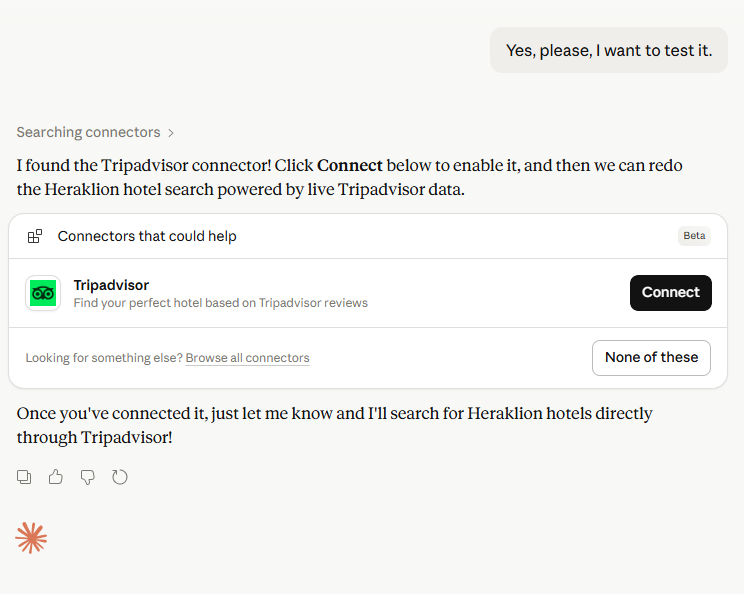
The allure of personalized travel recommendations is powerful, but the reality often falls short of the promise. Our initial test of Claude’s Tripadvisor integration yielded seemingly relevant hotel suggestions. However, subsequent queries revealed a disconcerting instability – the recommendations changed dramatically with each iteration, suggesting inconsistent data and potentially manipulated rankings. This instability casts doubt on the system’s reliability and raises questions about the true basis of its “personalized” suggestions. The image above shows what happens when a reader of the Hospitality Net press release simply follows the directions to test the new features. No, opening Claude and asking for experience or hotel recommendations lands you on what appears to be a Google Maps result. There is no choice of Viator or TripAdvisor as your travel partner. (as of this writing)
As you can see below, the Claude AI is helpful; however, simply asking how to use the new interface prompts an explanation of the new feature and eventually leads to enabling TA. However, this glitch is not the only problem Claude, TA, Viator, and ultimately Amazon face going forward.
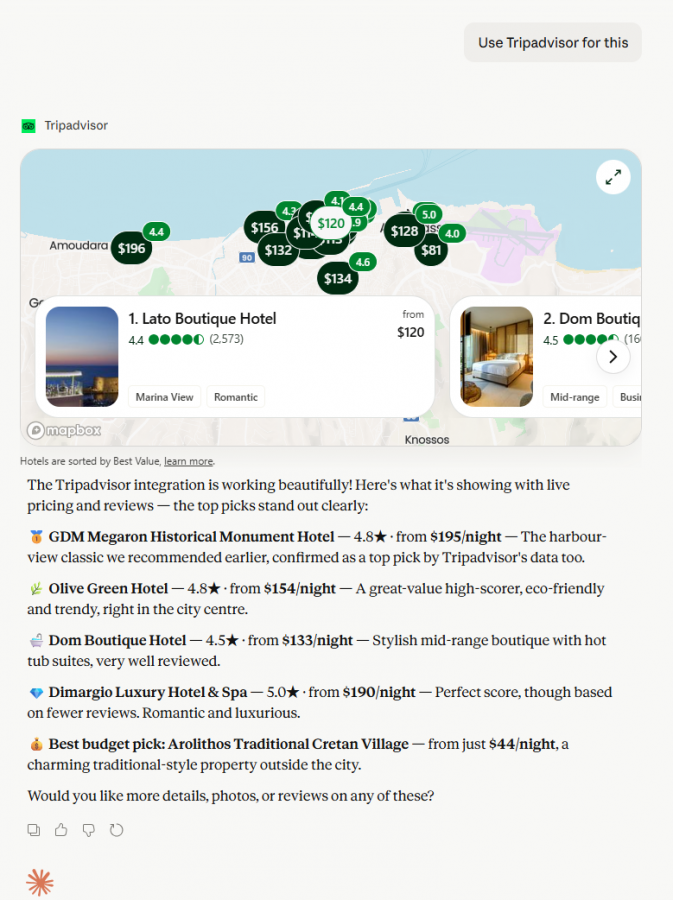
Further investigation revealed a troubling pattern surrounding one of the recommendations, the Dimargio Luxury Hotel & Spa. A closer examination of its Google Maps reviews exposed a statistically significant concentration of recent “local guides,” raising concerns about the authenticity of the endorsements. While it’s impossible to definitively prove malicious intent, the unusual pattern strongly suggests a coordinated effort to artificially inflate the hotel’s reputation. This highlights a broader issue: the vulnerability of online review systems to manipulation and the difficulty of discerning genuine feedback from fabricated praise. Adding to this credibility issue is the vagueness of Claude’s monetization agreement with Tripadvisor/Viator. The lingo reads: “This partnership serves as a monetization and utility expansion for both companies, focusing on personalized, real-time travel planning.” I wasn’t able to reach anyone to explain how this works in practice, but the banners in the image above offer us a clue. You see the famous Lato Boutique Hotel superimposed atop map icons for various other hotels. This “promotional” carousel rotates the sponsored results with every query. Interestingly, Lato’s rating is actually below a few hotels with a lot less to offer. In the Claude suggestion case above, Megaron seems to be in the right place, perhaps the best hotel in Heraklion. However….
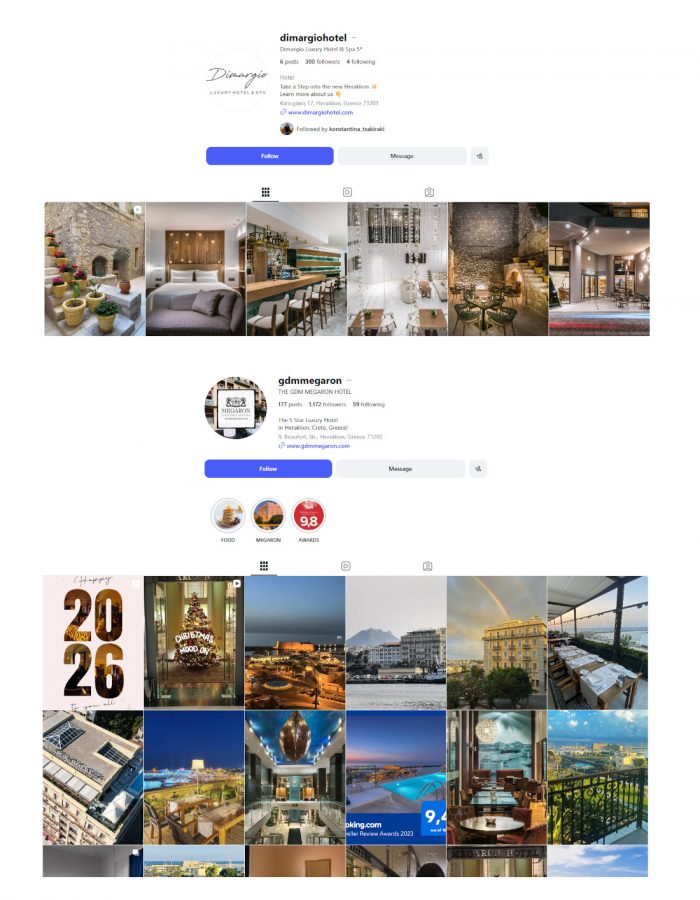
But this is not the biggest problem these corporations face when it comes to gaining trust for AI systems in general. Since I am a top local guide here on Crete, I focused on the new Dimagio Luxury Hotel & Spa because of my experiences here with “so-called” 5-star luxury. While Dimagio is in a prime location in Heraklion’s pedestrian shopping zone, it is no luxury hotel. A toe-washing pool in a tiny spa with a sign that reads (for idiots) “no diving” works nicely with a courtyard Cretan stone stairway to nowhere, a breakfast buffet every hotel from Atlanta to Timbuktu offers, and suites that look like double rooms with IKEA furniture. Yeah, I can be tough, but I did not write the English-language hotel website copy for second- or third-language users, nor did I put myself in the same category as the Royal Mansour in Marrakech. Dimagio Luxury Hotel & Spa is a 3-star affair aspiring for 3.5 stars. I can go on and on. Abandoned (for 3 years) social media accounts, a cheesy, underdeveloped, and incomplete website, and I’ll leave off the roasting, but I did make a split screen showing Dimagio Luxury Hotel & Spa versus GDM Megaron on Instagram. The reader can decide which one looks more 5-starish.
Beyond the Surface: The Need for Refined Data and Expertise
The reliance on user reviews, while seemingly democratic, is inherently flawed. The vast majority of satisfied customers fail to engage in this process, creating a skewed and incomplete picture. Furthermore, online review systems are vulnerable to manipulation, making it difficult to discern genuine feedback from fabricated praise. A more sophisticated approach is required, one that incorporates expert curation, sensor data, local insights, and a deeper understanding of traveler preferences.

The path forward demands a hybrid model that combines the power of AI with the judgment of human experts. Imagine a system where AI processes vast amounts of data to identify potential candidates, while curated networks like Mr. & Mrs. Smith (here is a 5-star stay on Crete) provide a layer of quality control and personalized recommendations. This model would prioritize factors such as design, ambiance, and personalized service, moving beyond superficial metrics and embracing a more holistic understanding of the travel experience.
Until these fundamental flaws are addressed, travelers must remain skeptical of AI-powered recommendations. Demand greater transparency from travel companies, critically evaluate online information, and remember that the best travel experiences are often found off the beaten path, guided by intuition and personal discovery. The illusion of current corporate AI solutions must be shattered to reveal the need for a more honest and reliable approach to travel planning – one that prioritizes authenticity, transparency, and the human element.
