- ARCHELON’s Sea Turtle Beach Walk program integrates tourism with environmental education on Crete’s critical nesting beaches.
- Walking tours are held daily in Chania, Rethymno, and Kalamaki in the Messara Gulf.
- Participation funds field conservation efforts directly through visitor donations.
ARCHELON’s Sea Turtle Beach Walk program enables participants to experience a side of Crete beyond those featured in glossy tourism brochures. In Chania, Rethymno, and now Kalamaki in the Gulf of Messara, locals and travelers learn to coexist with the loggerhead sea turtles, the iconic Caretta caretta, on nesting beaches where these majestic reptiles continue a reproduction cycle older than beachgoing.
How Beachgoing Damages Ecosystems
Interestingly, beachgoing, which became a trend among the European elites in the late 18th century in Britain, was initially a medical treatment for various ailments, such as “melancholy, rickets, leprosy, gout, impotence, tubercular infections, menstrual problems and hysteria.” (Smithsonian Magazine)
The modern beach culture emerged after World War II, influenced by the carefree surfing lifestyle, the rise in package deals, and a well-cemented idea that sunbathing (sunlight) had significant therapeutic benefits.
While beachgoing is now a mainstream leisure activity, one cannot ignore its impact on wildlife: many ecosystems have been altered to make room for the tourist frenzy, and, like Crete, many islands suffered damage because of rapidly built tourist infrastructure, resource drainage, and coastal erosion. But the ecological impact is undeniably greater, leading to habitat loss, declining biodiversity, marine pollution, and artificial light disturbance, among many other effects.
- Coastal development, including hotels, promenades, and seawalls, often destroys fragile dune systems, which are natural storm barriers and provide essential habitats for numerous coastal species.
- Intense visitor activity can damage sensitive dune vegetation and disturb critical nesting areas used by shorebirds and sea turtles.
- Large volumes of litter left behind by beachgoers eventually find their way into the sea. Plastic waste breaks down into microplastics that enter the food chain, threatening marine wildlife.
- Chemicals released from sunscreens and personal care products can accumulate in coastal waters, affecting marine organisms and contributing to the degradation of sensitive ecosystems.
- Bright beachfront lighting can disorient newly hatched sea turtles. Instead of moving toward the sea, hatchlings may head inland, dramatically reducing their chances of survival.
The impacts are dramatic enough that some experts have called for a “degrowth of tourism in Crete,” as you can see in the paper “The Degrowth of Tourism Industry in the Island of Crete, Greece. Is it Desirable and Feasible?” published by John Vourdoubas in the International Journal of Current Science Research and Review in 2025.
Why ARCHELON’s Sea Turtle Beach Walk Matters for Crete’s Future
Through ARCHELON’s Sea Turtle Beach Walk program, an ordinary evening stroll transforms into an intimate encounter with a fragile life cycle. Visitors walk past marked nests and tracks left just hours before, guided by researchers who decode the silent language of the coastline. It is a stark departure from the typical commercial holiday, shifting the focus from consuming a landscape to understanding its vulnerability.
The scale of the operation relies heavily on data, international volunteer support, and community engagement to keep these nesting grounds secure. Although new, the program is already successful:
- 30,000 participants: The number of visitors and locals engaged in ARCHELON’s awareness programs in Crete last year.
- 45 minutes: The duration of the daily guided beach walks, scheduled at 08:00 and 19:00.
- 3 active zones: Chania, Rethymno, and Kalamaki (Messara), which joined the initiative on June 10, 2026.
- €50 donation: The booking fee for two adults and up to four children, directly funding local conservation.
- 8 hotels: Coastal properties in Northern Crete recently certified as “turtle-friendly” by the TUI Care Foundation.
“On our walks, visitors see the nests and the turtle tracks in the sand, getting a complete picture of the life and biology of the Caretta caretta,” Danae Tsaparli, ARCHELON’s program manager for Crete, told ANA-MPA news agency. “Through this process, they better understand why protecting these reproductive beaches matters.”
Tsaparli noted that these programs serve as an essential tool for environmental education, targeting both international travelers and local hotel staff. By training hospitality workers, the organization bridges the gap between commercial tourism and habitat preservation.
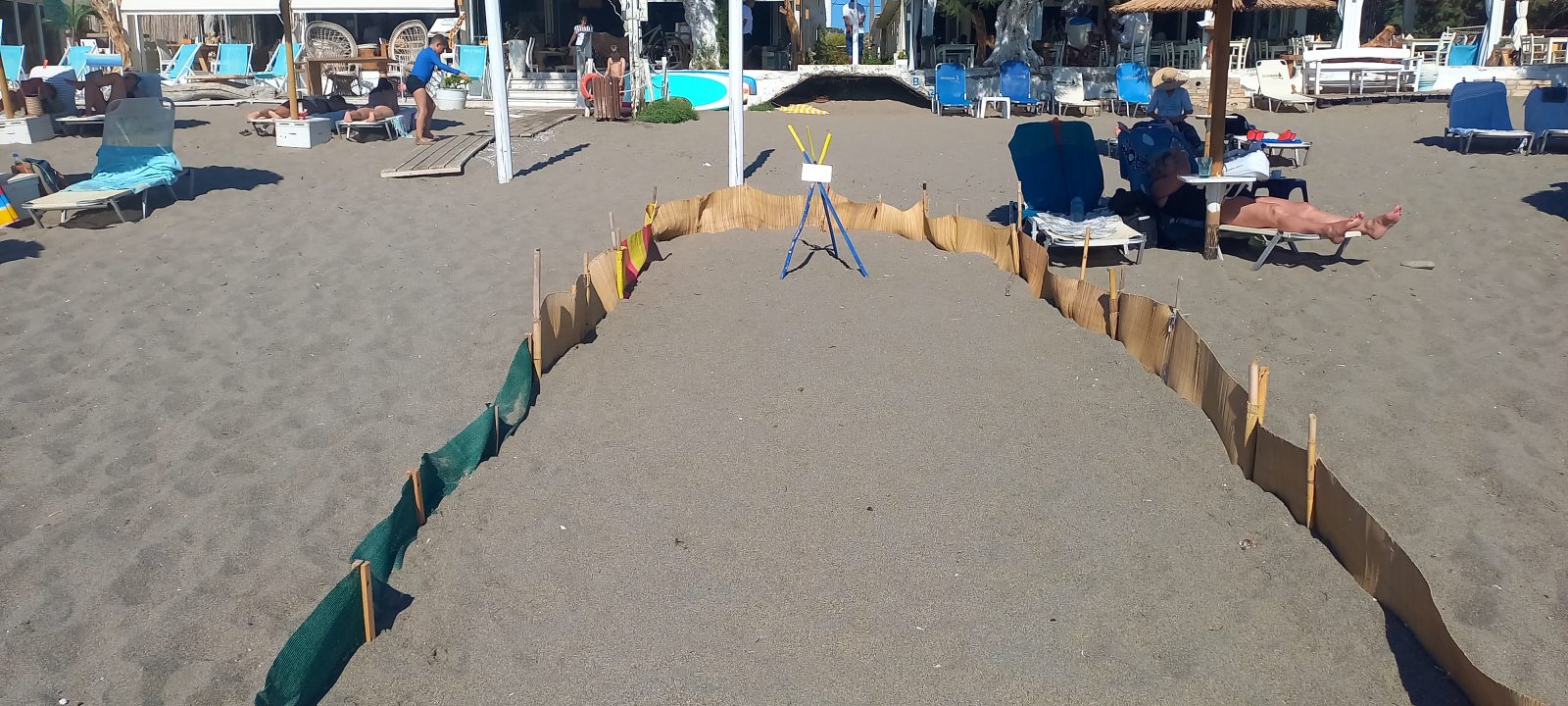
The global travel industry is noticing this balance. ARCHELON’s walking tours were recently showcased at an international seminar in Japan as a benchmark for sustainable tourism. The initiative proves that destinations with unique ecosystems hold a distinct competitive edge when preservation dictates the rules.
