- Intense rainfall overnight and into March 25, 2026, has caused small- to medium-sized landslides at several points along Heraklion’s roads.
- Affected sections include the route from Agies Paraskies toward Voni and the Northern Road Axis of Crete (VOAK) near Fodele.
- Minor slides were also reported earlier this morning at Vlychia in the Knossos area.
- No further incidents have been confirmed so far, but drivers are urged to exercise extra caution in wet conditions.
- Situation remains fluid; conditions can change rapidly on Crete’s roads after heavy rain.
- The good news: huge volumes of runoff are rushing toward the Aposelemis Dam.
Crete’s northern coast woke up to the familiar sound of rain drumming on roofs and the less welcome sight of loose earth and rocks spilling onto asphalt. In the Heraklion regional unit, overnight downpours have already loosened slopes in multiple locations, reminding everyone how quickly the island’s terrain can shift from scenic to hazardous when the weather turns.
The worst-affected stretches so far lie on secondary roads between Agies Paraskies and Voni, where material has come down in noticeable quantities. On the main Northern Road Axis of Crete (VOAK), drivers are encountering similar problems near Fodele. Earlier that morning on March 25, small-scale slides were also spotted at Vlychia, an area linked to the Knossos settlement, as first reported by local media.
At this stage, authorities have not logged any additional major disruptions. Still, the message is clear: the situation is live and unpredictable. Crete’s hillsides, especially after a dry winter followed by sudden heavy rain, do not always wait for official warnings before shedding debris.
Precious Water Straight to Aposelemis Dam
Amid the disruption, a striking piece of footage offers a different perspective. A video posted by Hersonissos Mayor Zacharias Doxastakis on his personal Facebook account shows a powerful torrent of water surging from the tunnel exit at Gonies in the Pediada region, racing downhill directly toward the Aposelemis Dam.
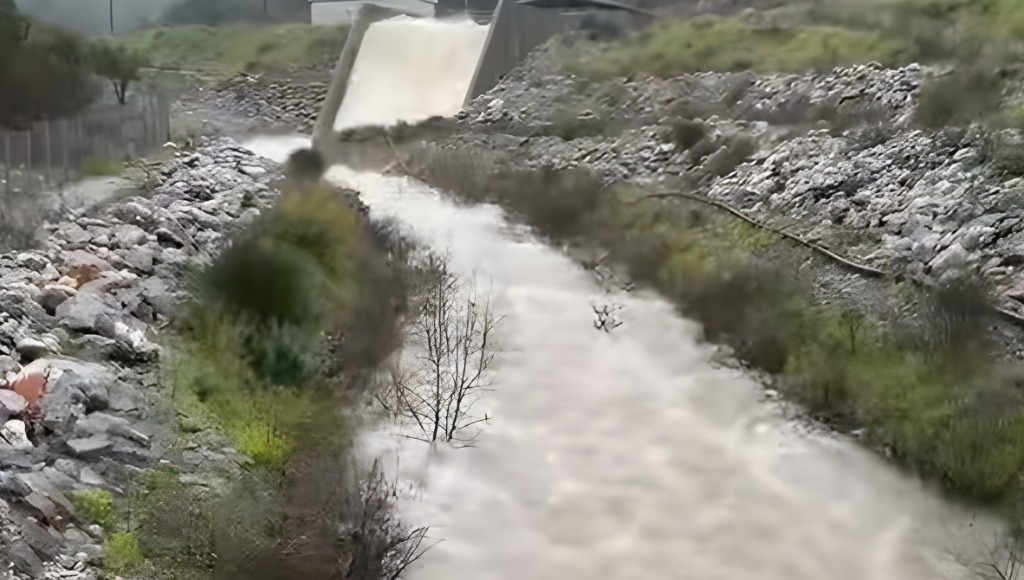
Standing in the aftermath of a recent public clash with the Crete Development Organisation (OAK), the mayor did not hide his relief. “I feel satisfied because after so much criticism and attack I received, at least the mechanisms have been activated and we will save as much water as possible that God has given us so generously at this moment,” he commented.
For an island that has battled chronic water shortages for years, scenes like this carry real weight. Every cubic metre captured in the reservoir means less pressure on wells, less risk of summer restrictions, and a stronger buffer for agriculture and tourism alike. The mayor’s comment reflects both personal vindication and a broader pragmatism: when nature finally opens the taps, Crete must be ready to store every drop.
Practical Advice for Drivers
If you are on the road in the Heraklion area right now or planning to travel, slow down and stay alert. Wet surfaces reduce grip, visibility can drop quickly in showers, and loose stones or small slips can appear without notice. Keep a generous distance from the vehicle ahead, avoid sudden braking, and never attempt to drive through standing water or obvious debris.
Reduce speed particularly on bends, bridges, and any stretch flanked by steep banks or cuttings. The VOAK is generally well-engineered, but even major arteries are not immune when water saturates the ground above them. Secondary roads, with their tighter turns and narrower shoulders, demand even greater respect.
Check local traffic updates before setting off — conditions can evolve fast. If you spot fresh debris or a fresh slide, report it immediately rather than trying to navigate around it yourself. Better a short delay than a damaged car or worse.
As of now, the network is still passable with care. No widespread closures have been announced, and the incidents appear localised. That can change with the next heavy burst, so keep an ear on local radio or reliable traffic apps and adjust plans accordingly.
