As artificial intelligence sweeps through hospitality, a booming axis of conferences, consultants, and costly “future-ready” solutions is emerging alongside it — and travelers may ultimately pay the price.
Somewhere in America right now, beneath programmable chandeliers and giant LED walls pulsing with phrases like “AI Transformation,” “Future Readiness,” and “The Intelligent Guest Journey,” a hotel owner is being quietly persuaded that survival itself may depend on buying into artificial intelligence. Not necessarily building it, understanding it, or even deploying it particularly well, but buying into the ecosystem surrounding it: the conferences, the consultants, the sponsored panels, the strategic workshops, the recurring software subscriptions, the integration specialists, the cybersecurity advisors, and the endlessly multiplying platforms promising to “unlock operational efficiency” while simultaneously introducing new layers of cost, abstraction, and dependency. The modern hospitality conference increasingly resembles a fusion of technology expo, revival meeting, and managed anxiety marketplace, where exhausted operators wander exhibit floors collecting tote bags, scanning QR codes, and absorbing the subtle but relentless message that failing to embrace AI quickly enough may leave them obsolete in a rapidly changing world.
That fear, more than artificial intelligence itself, has become one of the hospitality sector’s newest and most profitable products. Around the legitimate emergence of machine learning tools and language models, an enormous secondary economy is now forming, populated by keynote speakers, transformation strategists, AI literacy trainers, compliance consultants, branding firms, managed-service vendors, and software companies all competing to position themselves as indispensable interpreters of the future. A press release the other day from BLLA (Boutique & Luxury Lodging Association) is one example of a cottage industry sprouting up. Looking at some of the AI expert panels popping up all over the industry, I could not help but notice that most have little or no deep AI expertise. One even worked recently at Walmart Story #8 in Boston just a year and a half ago. I don’t want to single out people, but this statement from the organization’s founder and CEO mirrors dozens of other pitches aimed at snagging sponsors and attendees to events.
“The pace of change in hospitality technology, especially AI, is accelerating rapidly. This year, we’ve intentionally created a platform where owners, investors, and innovators can not only understand what’s coming, but connect directly with the companies, investors, and ideas driving it.” — Frances Kiradjian, Founder & CEO, BLLA
Nor is this trend limited to boutique hospitality circles alone. Across the broader hotel technology sector, conferences and forums increasingly center themselves around artificial intelligence, digital transformation, predictive analytics, and automated guest engagement. From large-scale hospitality technology expos to specialized AI summits, the industry is rapidly constructing an entire educational and commercial framework around technological urgency itself, complete with sponsored speaking opportunities, vendor ecosystems, premium networking events, certification programs, and recurring software partnerships.
Part of the business of these organizations is plugging this service or that. For instance, BLLA is monetizing crash courses and pushing services like the Gamma AI suite. Furthermore, the language surrounding these events often drifts into a strange blend of Silicon Valley evangelism and corporate self-help philosophy, where ordinary business practices are repackaged into grand technological narratives about disruption, adaptation, optimization, and inevitable change. A hotel owner seeking practical guidance on reservation systems or customer communication may instead encounter panels discussing “predictive guest sentiment modeling” or “agentic hospitality ecosystems,” phrases that sound profoundly important while frequently concealing remarkably ordinary software wrapped in futuristic branding. Returning for the moment to Gamma, we did a fast assessment based on customer sentiment and other reviews.
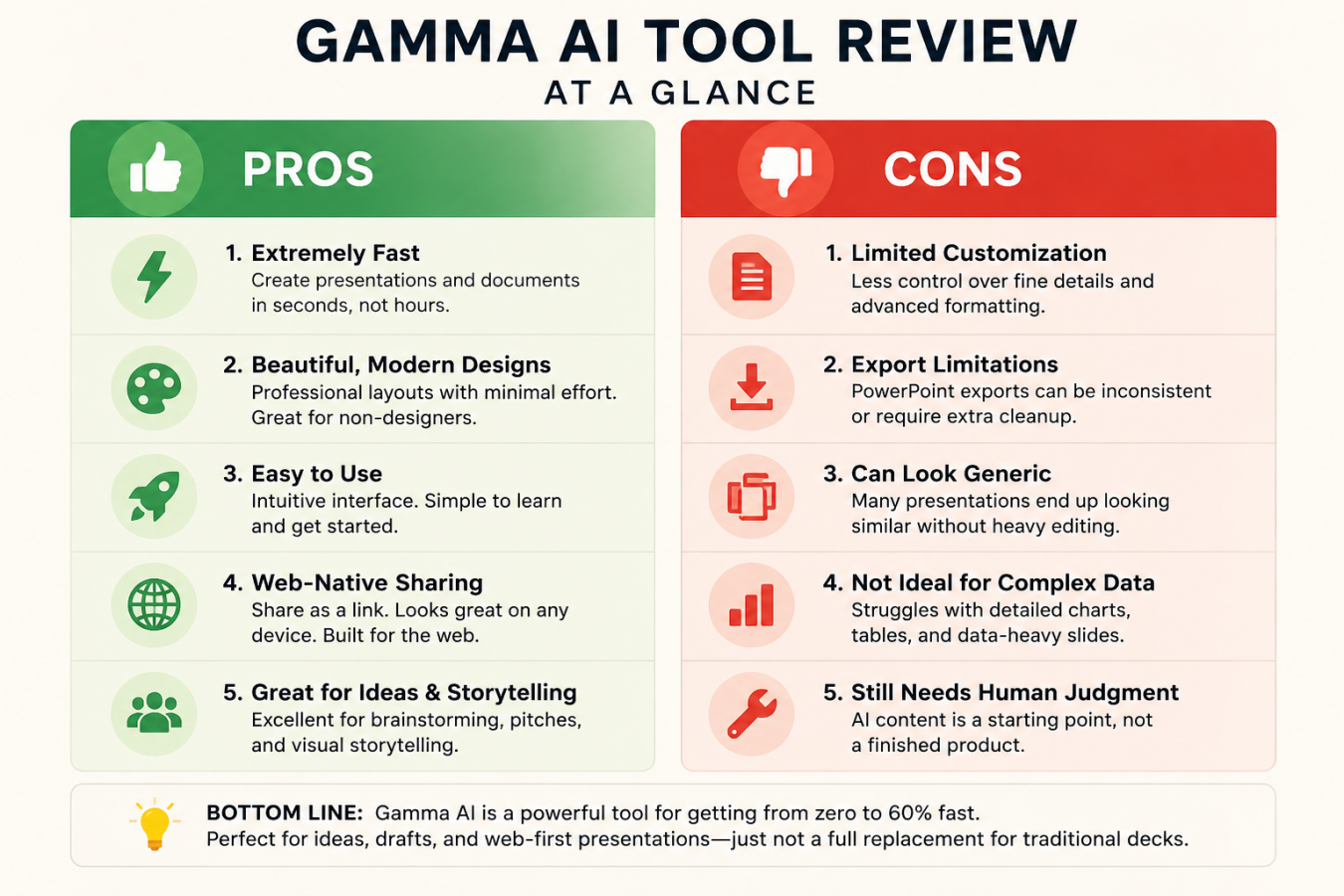
The mixed reception surrounding platforms like Gamma reflects a broader uncertainty running through the hospitality industry’s current relationship with artificial intelligence.
Even major industry studies reveal how early and unstable the current adoption cycle remains. A recent PwC hospitality report found that while over 90% of surveyed organizations were piloting or experimenting with AI systems, only 3% reported achieving full-scale implementation, suggesting an industry still deep in experimentation rather than settled technological maturity. In practical terms, many operators may still be paying premium prices to participate in a technological landscape whose long-term standards, dominant platforms, and operational realities have yet to fully settle.
Veteran hoteliers have seen versions of this cycle before. From the early Web 2.0 era through the rise of social media marketing, mobile-first booking strategies, reputation management systems, guest apps, and countless other digital “must-have” revolutions, operators were repeatedly encouraged to adopt rapidly evolving technologies before standards, consumer behavior, or long-term value had fully stabilized. Many invested heavily in fragmented platforms and piecemeal solutions that later became obsolete, redundant, incompatible, or absorbed into broader systems offering simpler and cheaper alternatives. Artificial intelligence may ultimately prove more transformative than many earlier technological waves, but the underlying pattern remains familiar: periods of rapid innovation often produce as much commercial anxiety and opportunistic overselling as genuine long-term utility. The danger for smaller operators is not necessarily moving too slowly, but committing too aggressively to expensive ecosystems before the landscape itself has matured.
The irony is that boutique hospitality became valuable precisely because it resisted the industrial sameness that large-scale automation helped create in the first place. Travelers increasingly pay premium prices not merely for accommodation, but for atmosphere, memory, locality, personality, and the small imperfections that signal authentic human presence. What guests often remember years later is not a frictionless digital upsell funnel or an AI-generated recommendation engine, but the handwritten restaurant suggestion left at reception, the bartender improvising a drink not listed on the menu, the owner who somehow remembers their name from a visit years earlier, or the aging Labrador asleep near the lobby fireplace while rain hits the windows outside. These details are not inefficiencies in need of optimization. They are the emotional architecture of hospitality itself, the subtle human textures that separate memorable places from sleep pods managed by software dashboards.
None of this means artificial intelligence lacks value. In fact, many smaller operators could genuinely benefit from carefully selected tools that reduce repetitive administrative work, improve multilingual communication, simplify reservations, assist overextended staffs, or help independent properties compete with larger chains possessing far greater technical resources. Used intelligently and modestly, AI may ultimately lower stress levels for employees while freeing human beings to spend more time doing the things guests actually value: solving problems creatively, offering warmth, improvising solutions, and creating experiences that feel personal rather than procedural. The danger emerges when practical utility becomes overshadowed by technological theater, particularly when fear-driven adoption pressures businesses into expensive systems they neither need nor fully understand.
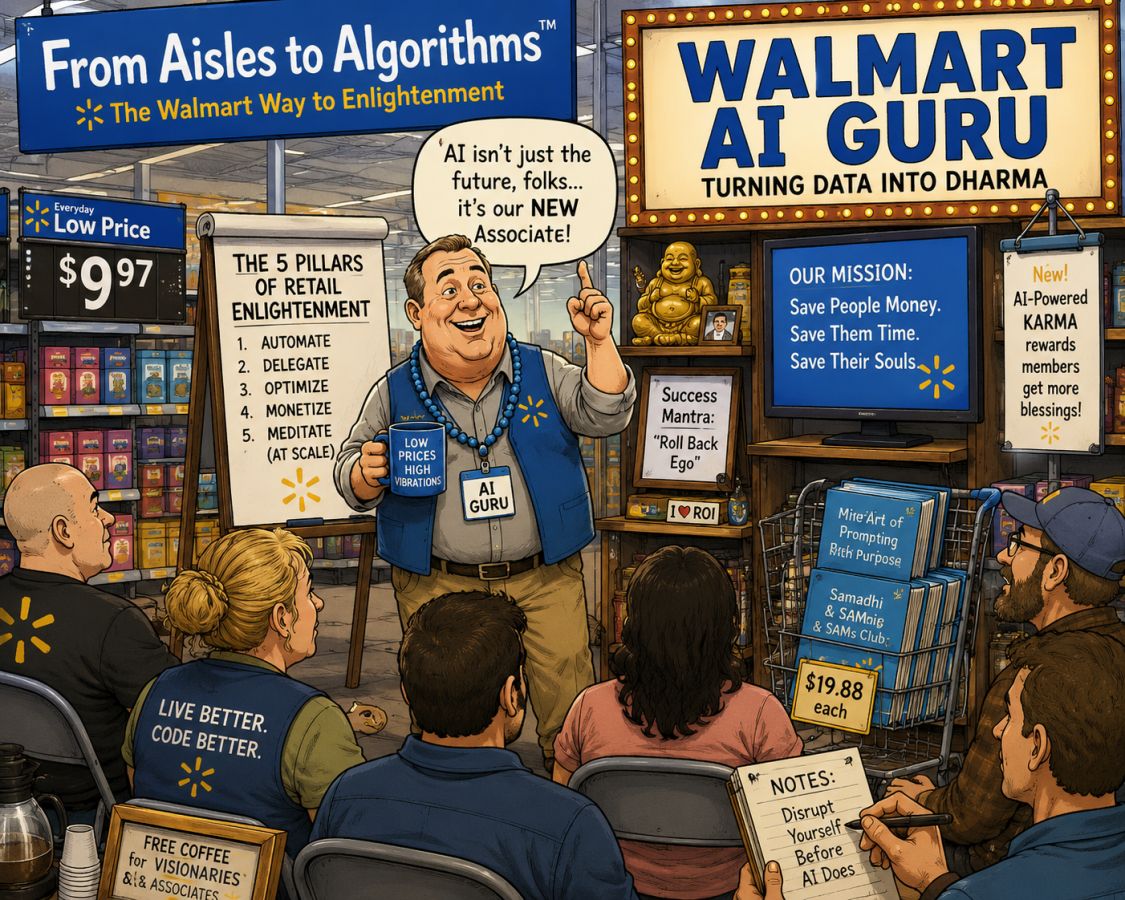
And that theater is becoming increasingly expensive. Hospitality operators are now expected to purchase admission into a sprawling educational-industrial complex built around AI readiness itself, with conference tickets costing thousands of dollars before airfare, sponsorship packages reaching astonishing levels, and exhibition booths transforming convention centers into glossy cathedrals of corporate futurism. Beneath the polished language about innovation and transformation lies a simpler commercial reality: every participant in this ecosystem is attempting to secure recurring revenue streams from an industry already struggling with labor costs, inflation, shrinking margins, and changing consumer expectations. Each new platform promises simplification while introducing another subscription invoice, another dashboard, another onboarding cycle, another consultant, another integration partner, and another dependency requiring future maintenance. Eventually, those costs rarely disappear into abstraction. They surface in room rates, resort fees, staffing reductions, diminished service quality, or increasingly sterile guest experiences that feel algorithmically managed rather than genuinely welcoming.
Perhaps the greatest contradiction of the current AI gold rush is that many of the loudest voices discussing hospitality’s future appear curiously detached from the emotional reasons people travel in the first place. Human beings do not cross oceans seeking optimized workflow architecture or predictive minibar analytics. They travel because they are lonely, exhausted, curious, heartbroken, adventurous, spiritually restless, or simply desperate to feel alive somewhere different for a few days. Hospitality, at its core, has always been emotional technology long before Silicon Valley appropriated the term. It is the ancient human art of temporary belonging. The risk facing the industry is not that artificial intelligence will suddenly become sentient and replace hotel owners, but that executives and investors may slowly automate away the very imperfections, spontaneity, and human warmth that made boutique hospitality valuable enough to survive in an age of global standardization.
The smartest operators will likely avoid both extremes. They will neither reject artificial intelligence reflexively nor surrender to the feverish consultant narrative insisting every property must immediately reinvent itself as a fully integrated digital ecosystem. Instead, they will experiment carefully, adopt selectively, preserve human identity aggressively, and remember that technology functions best when it supports atmosphere rather than replacing it. Because in the end, travelers may tolerate mediocre apps, delayed updates, and malfunctioning televisions far more readily than they tolerate the creeping sensation that nobody is truly there anymore.
