- Etymology: Philoxenia is the love of the ritual of hospitality, not necessarily the stranger themselves.
- Divine Gamble: Ancient Greeks practiced Theoxenia—hospitality driven by the fear that a humble guest might be a god in disguise.
- Paideia Shift: Isocrates redefined “Greekness” from a matter of blood to a matter of education (Paideia).
- Modern Mirror: How the ancient fear of divine punishment has transformed into the modern economic dependence on tourism.
The smell of wild thyme and roasting lamb carries a weight in the Greek air that is older than the stones of the Parthenon. It is the scent of a contract. When a door opens to a stranger in a mountain village in Crete or a bustling taverna in Chania, a machinery is set in motion that dates back to the dawn of the Mediterranean.
We call it Philoxenia. But to understand it, we must strip away the travel brochure gloss and look at the “B-side” of the myth.
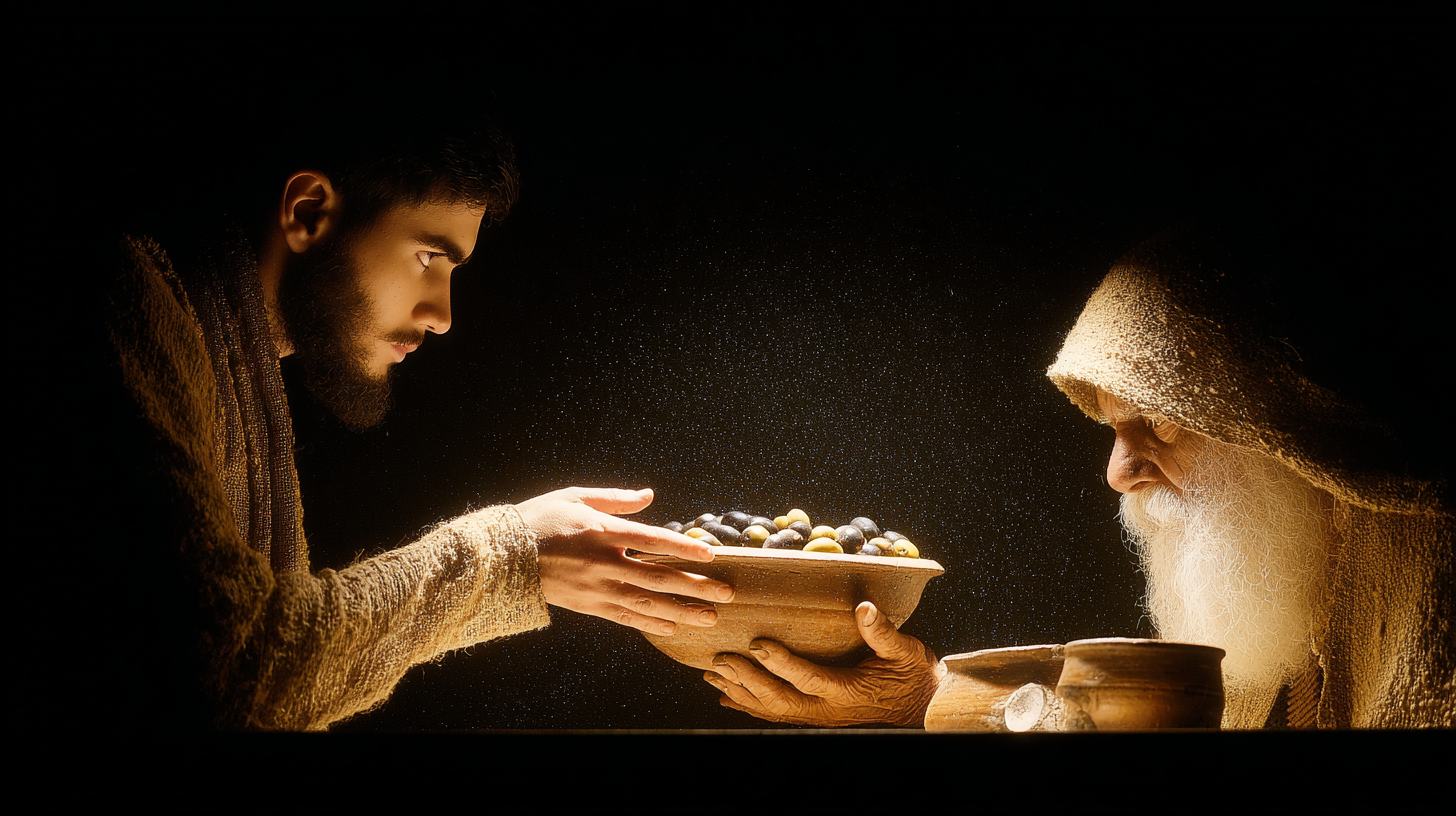
The Shadow of the God: Hospitality as Fear
To the ancient mind, a stranger at the gate was a riddle wrapped in a threat. This was Theoxenia—the belief that the gods, bored or vengeful, frequently donned the rags of beggars to test the mortals they encountered.
When you offered the best cut of meat and the softest bed to a traveler, you weren’t necessarily being “kind.” You were being careful. In the myths of Homer and Hesiod, many suffered for failing the test of hospitality. At its core, philoxenia acted as a kind of spiritual insurance.
Today, instead of gods, we have tourists, and punishment is not a lightning bolt from Zeus but a harsh one-star review that can hurt a local business. Still, material reward is what motivates people to open their doors.
The Great Demarcation: Language and Blood
For centuries, the Greek world was defined by the sharp edge of the “Greek/Barbarian” dichotomy. As Herodotus noted, being Greek was a fourfold seal: the same blood, the same language, the same gods, the same way of life. If you spoke the “barbarophone” tongue—the nonsensical bar-bar of the outsider—you were existing in a different reality.
Yet, even within this homogeneity, there was friction. The friction that persists today between the north and south, or the historic rivalry between Athens and Sparta, reminds us that “Greekness” has always been a contested territory.
Isocrates and the Invention of the Mind
It was the orator Isocrates who threw a wrench into the gears of tribalism. He proposed a revolutionary thought: Greekness is not a biological cage, but an intellectual achievement. Through Paideia (education), a “Barbarian” could become civilized.
“The name Hellenes is applied rather to those who share our paideia than to those who share a common character.” — Isocrates, Panegyricus.
This shifted the goalposts of Philoxenia. If the “Other” could be educated, then the “Other” could eventually become “Us.” It turned the hospitality ritual into a pedagogical bridge.

The Spartan Wall vs. The Athenian Mirror
Nowhere is the tension of the stranger more evident than in the contrast between the two great powers of antiquity:
- Sparta and Xenelasia: The Spartans practiced the literal “pushing out” of foreigners. While they welcomed Paris of Troy (a hospitality that famously backfired), they were suspicious of the “evil” they might learn from outsiders—especially Athenians.
- Athens and Arrogance: Pericles boasted that Athens was an “open city,” but as Thucydides suggests, this wasn’t necessarily born of a love for the stranger. It was born of a supreme confidence. Athens was so superior that it had nothing to fear from the gaze of the outsider. It wasn’t Xenophilia; it was a performance of power.

From Zeus to the Slow Drip
As we sit today, perhaps over a slow-drip coffee in a corner of Chania, we are the heirs to this complex psychological landscape. We still judge our culture by how we treat outsiders, even if those outsiders now have smartphones and digital maps.
A Cultural Comparison
| Concept | Ancient Driver | Modern Equivalent |
| Theoxenia | Fear of Divine Punishment | Fear of Negative Online Reputation |
| Xenophilia | Intellectual curiosity (Isocrates) | Cultural exchange and Globalism |
| Xenelasia | Protection of local “morals” | Over-tourism regulations/Zoning |
| Material Reward | Gifts from Gods/Heroes | Protection of local “morals.” |
Whether it comes from old fears of hidden gods or today’s need to make a living, the ritual is the same. We offer a seat, pour a drink, and hold the door open. In the end, Philoxenia is the philosophy of the open hand—sometimes extended in friendship, sometimes in transaction, but always extended.
In other words, Philoxenia is a cultural instinct shaped by history, survival, and the understanding that today’s guest could be tomorrow’s lifeline.
