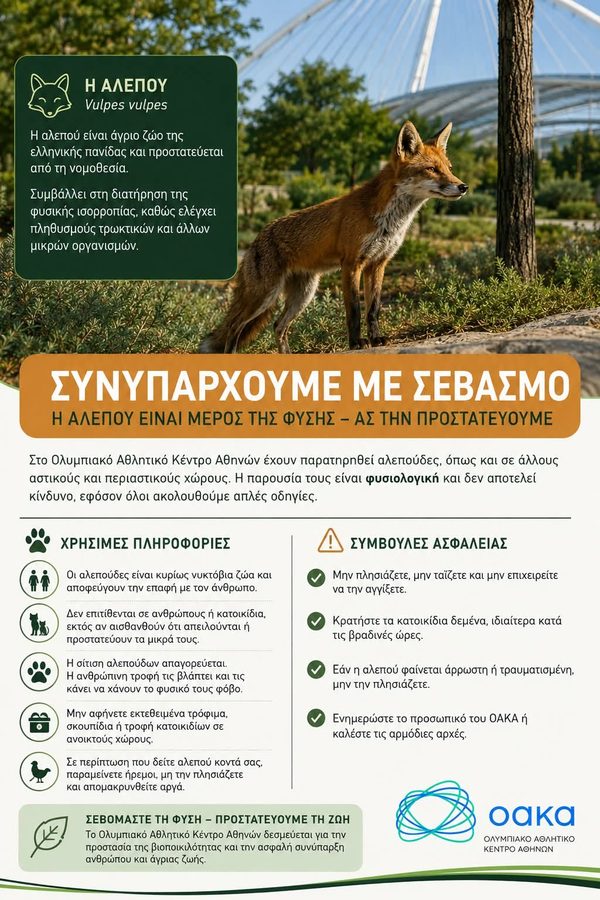
Athens’ Olympic sports complex has some unexpected new visitors, and they are considerably furrier than the usual crowd. Foxes have been spotted around the grounds of OAKA, prompting the administration to issue a few simple instructions to athletes, visitors, and everyone else using the sprawling complex.
No, this is not fake news. The foxes are really there.
OAKA has contacted the relevant authorities and environmental services to report the animals and seek guidance on how to manage their presence while keeping both the wildlife and the public safe.
OAKA’s Rules of Engagement for Visitors
To keep both the human visitors and the sly newcomers safe, stadium management highlighted three fundamental rules:
- Keep Your Distance: Observe the foxes from afar. Do not attempt to approach, corner, or pet the animals for photo opportunities.
- Strictly No Feeding: Do not offer food scraps or snacks under any circumstances. Handouts alter natural foraging instincts and habituate wild animals to humans.
- Respect Urban Biodiversity: Treat the presence of urban wildlife as a positive reminder of natural ecosystems coexisting alongside city infrastructure.
The advice is particularly important because feeding wild animals can gradually change their natural behaviour and encourage them to become dependent on people. Keeping a respectful distance also gives the animals space to move through an environment that was not exactly designed with foxes in mind.
Foxes are remarkably adaptable animals, and encounters with them in urban and suburban areas are not unusual. Green spaces, abandoned areas and the edges of cities can provide food and shelter, sometimes bringing wildlife surprisingly close to people.
OAKA is a particularly large urban complex, with extensive surrounding spaces that can provide opportunities for wildlife to pass through or settle temporarily. Rather than treating the animals as an attraction, however, OAKA is asking visitors to simply leave them alone. The administration says it aims to achieve a safe coexistence between people using the facilities and the wildlife that has appeared there, while working with specialists on any further measures that may be necessary.
