You know the apple.
Bright green. Hard. Crisp. Sour enough to wake up your mouth. The Granny Smith is sitting in supermarkets across Crete and probably in your fruit bowl right now.
But who was Granny Smith?
Not a brand. Not a marketing invention. Not some mysterious old lady who wandered into an Australian orchard and accidentally created an apple.
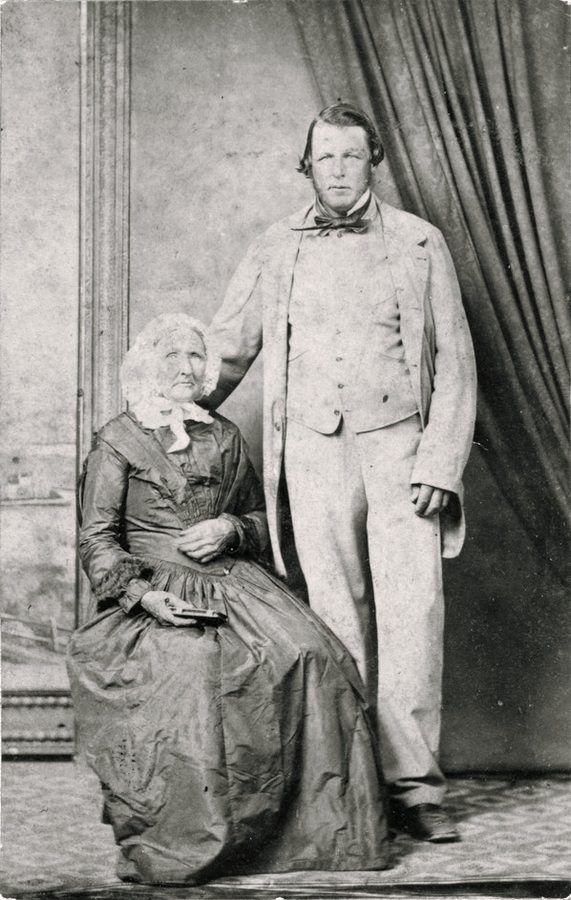
She was Maria Ann Smith, an English immigrant, an orchardist, and a woman who died before the apple that carried her name became a commercial sensation.
And that, frankly, is a much better story.
From Sussex to Sydney
Maria Ann Smith was born in 1799 in Peasmarsh, Sussex, England. She married Thomas Smith, a farm laborer, in 1819. They spent almost two decades in England and had eight children, although three died in infancy.
In 1838, the Smith family emigrated to New South Wales as part of a group of farming families recruited for the young Australian colony.
They arrived in Sydney aboard the Lady Nugent on 27 November 1838.
The family eventually settled in the fruit-growing district of Ryde, where Thomas and Maria established an orchard on land near what is now Eastwood. Their farm covered about 24 acres.
It is rather extraordinary to think about when eating an apple in Crete today.
A woman leaves rural England in the nineteenth century, crosses the world with her family and starts farming in Australia.
Then an apple happens.
The accidental apple
The Granny Smith story has acquired a lovely bit of folklore.
The earliest detailed account, recorded decades later in a 1924 newspaper article, said Maria had shown local growers a seedling growing beside a creek on her property in 1868. She reportedly explained that it developed from the remains of French crab apples grown in Tasmania.
The exact genetic story is less romantic and more complicated. Modern fruit records list the parentage as French Crab × unknown, while historical accounts describe the tree as a chance seedling.
But the important part is not whether every detail of the apple’s conception makes a perfect botanical story.
Maria Smith saw something worth keeping.
She propagated the seedlings.
Other local orchardists took an interest.
And eventually, that sharp green apple escaped the neighborhood.
Granny never saw what happened next
This is the part I like most.
Maria Ann Smith died in Ryde on 9 March 1870, only about two years after the discovery traditionally associated with the apple.
She never saw the Granny Smith become a widely commercial variety.
She never saw it traveling around the world.
She never saw people in places she had never heard of biting into her apple and making that unmistakable face when the sourness arrives.
But other people kept working with it.
Local growers exhibited it at agricultural shows. By 1891 and 1892, “Granny Smith’s seedlings” were winning attention and prizes. In 1895, the New South Wales Department of Agriculture identified the variety as suitable for export and began large-scale cultivation at its experimental station in Bathurst.
From an Australian orchard to a supermarket in Crete
Today, Granny Smith is one of the world’s best-known apples.
Its bright green skin and firm, crisp flesh make it useful both for eating fresh and cooking. The apple is also part of the ancestry of later commercial varieties, including Pink Lady and Jazz.
And here we are in Crete, more than 15,000 kilometers from the orchard where Maria Ann Smith’s chance seedling appeared.
We buy Granny Smiths without thinking. We put them in lunchboxes, slice them into salads, or bake them.
Or, if we have the correct relationship with apples, we eat them cold and crisp and sour enough to remind the tongue that it has a job.
The journey from Maria Smith’s orchard to a Cretan supermarket is more than a story about fruit.
It is a story about migration, agriculture, experimentation, trade and the strange ability of ordinary things to cross borders.
Granny Smith’s story has something wonderfully human about it. She did not become famous during her lifetime, nor did she build a company around apples. She didn’t give interviews. She didn’t know that her name would eventually become familiar to millions of people. She just noticed something growing on her land and recognized that it was worth cultivating.
So the next time you pick up a Granny Smith in Crete, remember the woman behind the name: Maria Ann Smith.
An English immigrant. An Australian orchardist. A grandmother whose chance seedling became one of the world’s most recognizable apples.
Everybody knows Granny Smith. Almost nobody knows Granny Smith. We should change that.
