- A destructive olive disease known as gleosporium is spreading across Crete.
- The disease severely damages olive fruit and oil quality.
- In some areas, farmers report income losses exceeding 50 percent.
- Experts warn that humidity and olive fly infestations increase the risk.
- Proper pruning, early harvesting, and targeted plant protection treatments can reduce the spread.
- The issue may affect olive oil prices, supply, and agricultural tourism in Crete.
A Threat in Crete’s Olive Groves
Across the hills and valleys of Crete, the olive tree is more than a crop. It is culture, economy, and identity—an ancient companion to the island’s people.
Yet in recent years, a destructive fungal disease known locally as gleosporium, often called the “leprosy of the olive,” has begun spreading across the island’s olive groves.
The disease attacks the olive fruit itself, gradually degrading both the quantity and the quality of the oil produced. In some areas, farmers have seen dramatic consequences: high acidity levels in olive oil and income losses exceeding 50 percent.
To understand the phenomenon, Argophilia spoke with Lambis Dedeletakis, an 80-year-old retired agronomist from the Agricultural Service of Ierapetra who continues to work with olive cultivation.
Few people, he says, fully understand how destructive the disease can become.
How the Disease Attacks the Olive
“In Italy the disease is commonly called the leprosy of the olive, while in Greece we know it as gleosporium,” Dedeletakis explains.
“It is a fungal disease that attacks the olive fruit from the stage of fruit set through ripening, especially when olive groves are exposed to high humidity conditions.”
The symptoms appear gradually.
“The fruit develops sunken, circular spots that slowly spread across the surface,” he says. “Eventually the olives shrink, rot, turn dark, and become completely unusable.”
The real problem emerges during the pressing process.
“If infected olives remain on the tree and are milled with healthy fruit, they produce very little oil and of extremely poor quality,” he explains. “Even a small number of infected olives can degrade an entire batch of olive oil.”
The disease also spreads easily.
“Infected olives left on the tree or fallen on the ground become sources of infection for the current and even the following harvest.”
What Farmers Can Do to Stop It
According to Dedeletakis, controlling gleosporium requires a combination of agricultural practices and plant protection measures.
The first step is improving airflow in olive groves.
“Farmers should prune the trees to thin the canopy, reducing humidity within the foliage,” he says. “Lower humidity means fewer conditions for fungal development.”
Another important measure is early harvesting in areas where the disease has been detected.
In addition, targeted treatments can weaken the fungal spores that survive in infected fruit residues left in the grove.
Dedeletakis notes that treatments may involve active ingredients such as pyraclostrobin, as well as other fungicides used at different stages of flowering and fruit development.
These treatments must follow a carefully timed schedule, particularly:
- Before flowering, if infections were significant the previous year
- During flowering, with two protective treatments
- After fruit set, usually in mid-summer
- During late summer, depending on infection pressure
He emphasizes that farmers should focus on active ingredients rather than commercial brands, ensuring proper and responsible application.
Copper Treatments Require Caution
One traditional approach—copper-based treatments—must be used carefully.
“Copper sprays are acceptable only during winter and autumn, not during the summer,” Dedeletakis warns.
“They should never be applied after flowering, and farmers must not exceed 400 grams of copper per hectare annually because of potential phytotoxicity to the olive trees.”
In other words, too much protection can become a problem in itself.
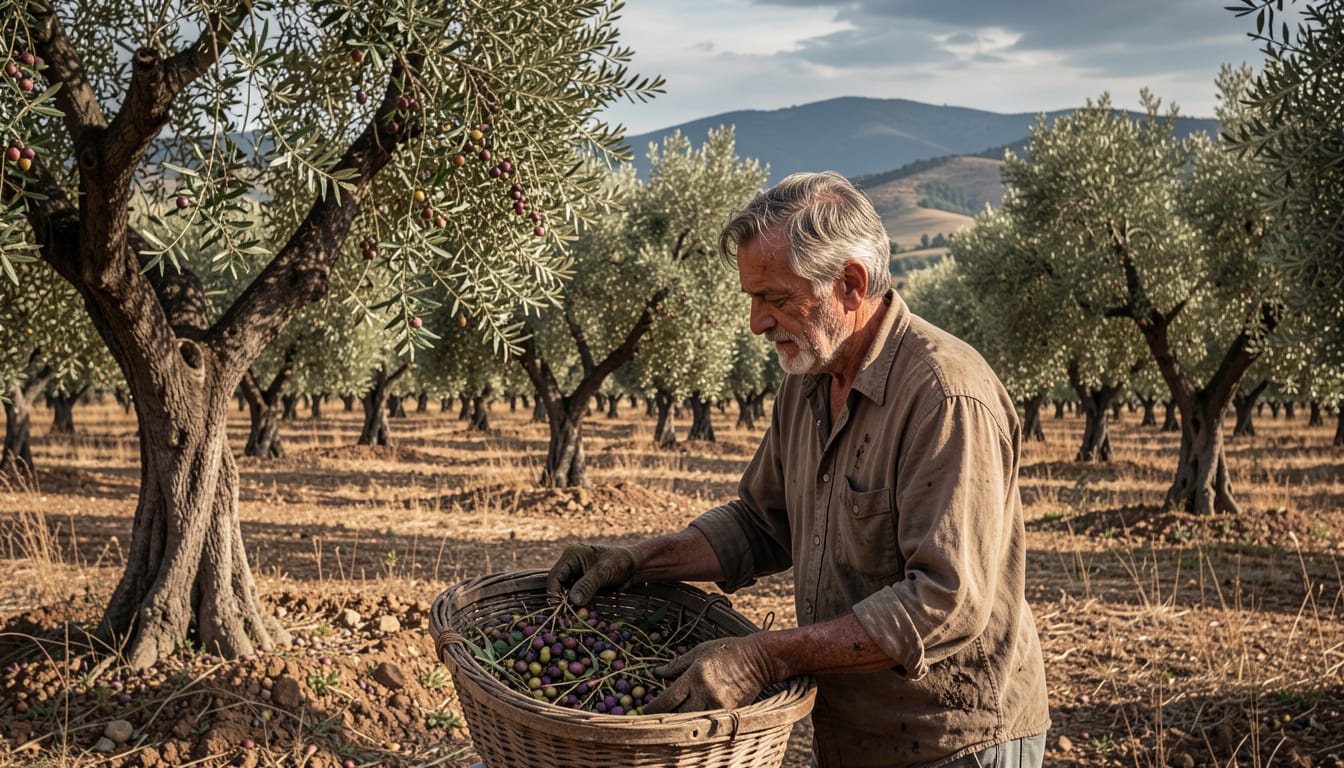
The Koroneiki Olive and Crete’s Identity
The most widely cultivated olive variety in Crete is the Koroneiki olive, a small but highly productive cultivar known for producing exceptional olive oil.
“The Koroneiki variety originated in the region of Koroni and was spread across Greece and Crete during the Venetian period,” Dedeletakis explains.
“It produces very high-quality oil and is an extremely vigorous tree.”
However, like all olive varieties, it requires balance.
“For good fruit production, the tree must maintain balance between vegetative growth and fruiting, as well as between the underground root system and the visible canopy.”
Farmers maintain that balance through:
- pruning
- irrigation
- fertilization
Without that equilibrium, productivity—and resilience to disease—can suffer.
What This Means for Consumers and Tourism
At first glance, a plant disease in olive groves might seem like a purely agricultural issue. In Crete, however, the implications reach much further.
Olive oil is one of the island’s most important agricultural exports and a cornerstone of the Mediterranean diet, attracting millions of visitors each year.
High-quality Cretan olive oil appears everywhere—from village tavern tables to luxury hotel kitchens.
If disease outbreaks continue to reduce yields or damage oil quality, the effects may ripple through the local economy:
- lower income for farmers
- Higher olive oil prices
- pressure on small producers
- and potential changes in supply for restaurants and tourism businesses
Agritourism may also feel the impact. Olive groves, olive oil tastings, and harvest experiences have become increasingly popular with visitors seeking authentic rural experiences.
Protecting the health of Crete’s olive trees, therefore, is not just about agriculture. It is about safeguarding one of the island’s defining cultural landscapes.

Lessons From Italy
Dedeletakis also points to developments abroad.
In Italy, olive groves have been fighting another devastating threat: the bacterium Xylella fastidiosa, which has destroyed millions of trees.
“Today the situation is gradually improving,” he says. “Large areas are being replanted, and new olive varieties resistant to the bacterium are now being cultivated.”
For Crete, the lesson is clear: vigilance, adaptation, and careful management are essential if the island’s olive groves—and its liquid gold—are to remain part of its future.
For many travelers, Cretan olive oil is not just a product but part of the island’s experience. Visitors encounter it everywhere—from village tavern tables and traditional bakeries to farm visits and olive oil tastings organized throughout the countryside.
Crete produces some of the highest-quality olive oil in the Mediterranean, largely thanks to the Koroneiki olive variety and the island’s climate. When diseases like gleosporium reduce yields or damage fruit quality, the effects can ripple far beyond agriculture.
Restaurants, food producers, and small family farms all depend on stable olive oil production. Protecting the health of the island’s olive groves, therefore, helps preserve one of the most recognizable elements of Cretan culture and cuisine.
For travelers, the golden oil poured over bread, salads, and local dishes is more than a flavor—it is a connection to the land itself.
Original report, in Greek, via NeaKriti: Η «λέπρα» της ελιάς απειλεί την παραγωγή στην Κρήτη – Το γλοιοσπόριο που ρίχνει την ποιότητα του ελαιολάδου
