- AI-powered drones are being tested to help shepherds locate and count sheep in the White Mountains.
- The AGRARIAN project combines drone technology, digital tools, and artificial intelligence.
- MAICh and the Technical University of Crete are working with livestock farmers in the Apokoronas area.
- The system can identify sheep even when shadows make visual detection difficult.
When finding a sheep stops taking half a day
Somewhere in the White Mountains, a sheep has wandered away from the flock. Traditionally, that can mean hours of searching across steep and difficult terrain. For a shepherd managing animals across large mountain areas, losing sight of even a few animals is not a minor inconvenience.
Now Crete’s livestock farmers are getting some decidedly modern help. Through the European AGRARIAN project, drones equipped with advanced cameras and artificial intelligence are being used to locate and count sheep in difficult-to-reach areas of the White Mountains.
The pilot work is initially being carried out with livestock farmers in Apokoronas, combining agricultural knowledge with technology developed by researchers at the Mediterranean Agronomic Institute of Chania (MAICh) and the Technical University of Crete.
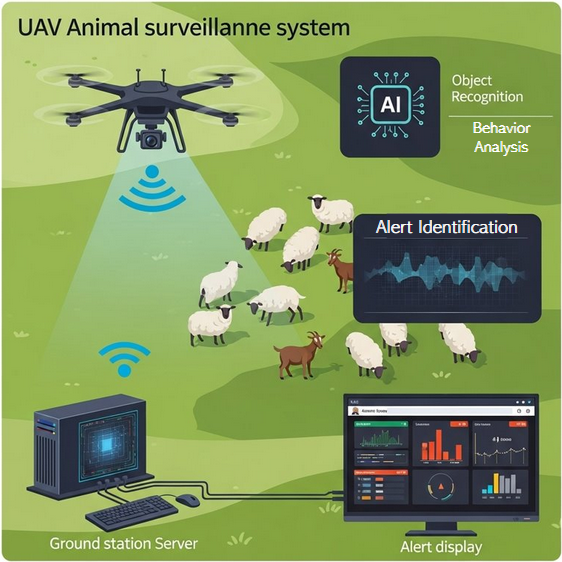
The drone does more than take pretty pictures
The technology is designed to give farmers a view of their flock from a distance. A drone can survey areas that would be difficult or time-consuming to reach on foot, allowing farmers to locate their animals and identify whether individual sheep have become separated from the main flock.
The artificial intelligence component makes the system particularly interesting. Researchers have developed algorithms capable of recognising sheep even when shadows and other visual conditions make them difficult to distinguish with the naked eye.
That could be particularly useful in Crete, where livestock are often managed across rugged mountain landscapes rather than conveniently flat fields.
Built for the reality of the Cretan countryside
The project is not simply about taking technology developed elsewhere and dropping it into Crete. The Technical University of Crete is contributing to the development and adaptation of the algorithms and the technical systems required to operate them in local conditions.
Researchers have had to deal with challenges involving the drones themselves, cameras, communication between airborne equipment and ground stations, and the practical requirements of operating the system in the field.
Meanwhile, MAICh researchers have worked directly with farmers to understand what they actually need from the technology.
A spectacular piece of technology is not much use to a shepherd if it is complicated, unreliable or designed around conditions that do not exist on a Cretan mountainside.
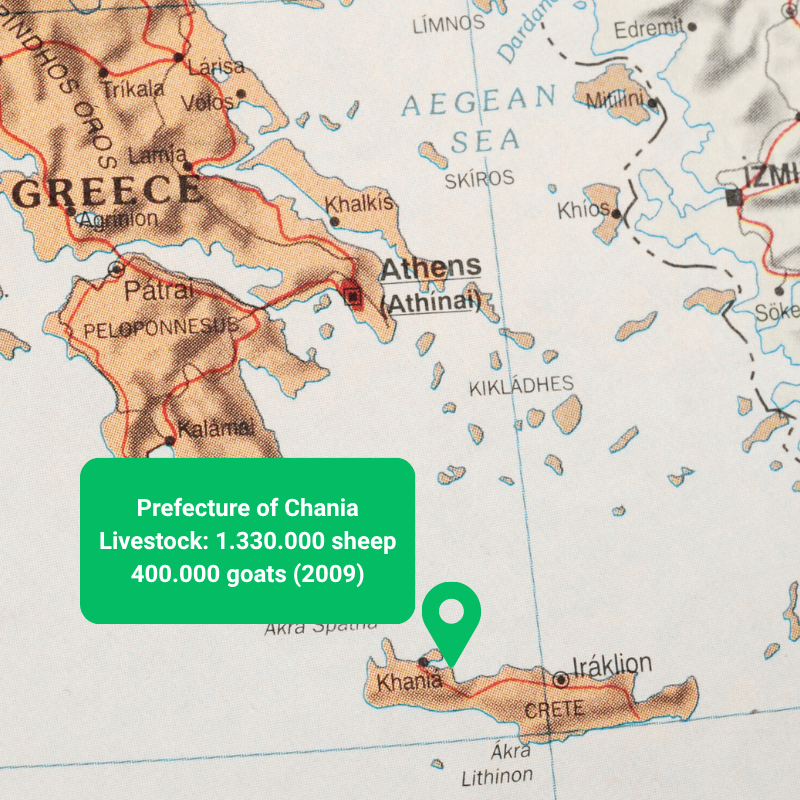
From livestock knowledge to artificial intelligence
One of the more interesting aspects of AGRARIAN is the collaboration between farmers and researchers.
Livestock farmers already possess highly specialised knowledge of their animals, terrain and daily working conditions. The project’s researchers are using that practical knowledge to help translate real farming needs into technological solutions.
The aim is therefore not to replace the farmer’s experience, but to give it another set of eyes — one that happens to fly.
Horizon Europe project puts Crete in the experiment
AGRARIAN is funded through the European Union’s Horizon Europe programme and coordinated by the National Centre for Scientific Research “Demokritos.”
The project reflects a broader European push toward digital tools that can make agriculture more efficient, sustainable and resilient.
For Crete’s livestock sector, the potential benefits are particularly practical: spending less time searching for missing animals, monitoring flocks more efficiently and gaining useful information without having to physically reach every corner of difficult terrain.
The landscape remains the same: mountains, sheep, shepherds and long-established farming practices.
But above the flock, a drone may soon be doing some of the watching.
And if artificial intelligence can reliably tell a shepherd where the sheep are, including the one that has decided to wander off into the least accessible part of the mountain, that is technology with a genuinely useful job to do.
