- Wind gusts up to 121 km/h recorded in eastern Crete
- Strongest gust measured in Finokalia, Lasithi
- Gusts above 100 km/h were also recorded in Falasarna and Heraklion Port
- Ferry routes affected and minor local power cuts reported
- Temperatures are unusually high, exceeding 17°C in southern areas
Crete has entered one of those meteorological moods where the island feels split between seasons, with violent winds tearing across the northern coastline while the thermometer insists on behaving as if it were early spring.
From Tuesday night into Wednesday, February 18, 2026, strong and persistent winds swept across large parts of the island, particularly the northern and eastern regions, creating travel disruption and minor infrastructure strain.
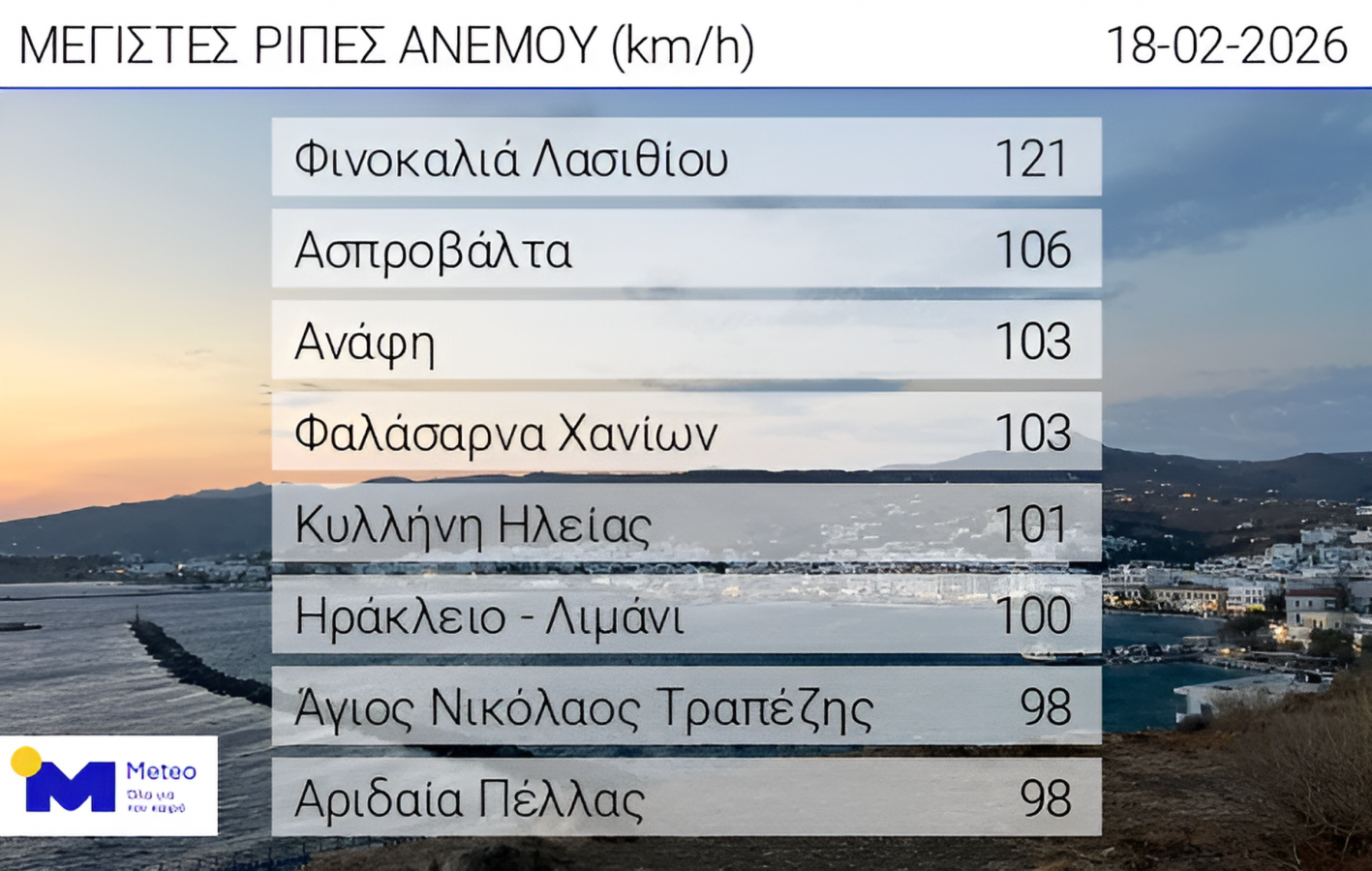
According to data from the Εθνικό Αστεροσκοπείο Αθηνών via meteo.gr, the most powerful gust was recorded at Φινοκαλιά in Lasithi, where winds reached 121 km/h — a speed that moves beyond inconvenience and into structural force.
Other notable recordings included:
- Φαλάσαρνα – 103 km/h
- Ηράκλειο Λιμάνι – 100 km/h
Gusts above 100 km/h are not cosmetic numbers. At these speeds, ferry schedules become fragile, high-profile vehicles become vulnerable, and loose infrastructure becomes airborne.
Reports from across the island mention:
- Temporary disruptions to sea routes
- Fallen branches in urban and rural areas
- Localized power interruptions
And yet, in classic Cretan fashion, the island delivered a second contradiction: warmth.
Just before 13:00, Crete recorded the highest temperatures nationwide. In Λέντας, the mercury climbed to 17.8°C. Ιεράπετρα followed with 17.6°C, and Πλακιάς reached 17.4°C. Central Chania and Heraklion registered 16.8°C, while Siva and Agios Nikolaos hovered around 16.6°C.
Wind Advisory for Residents and Visitors
- Avoid unnecessary coastal travel, especially along exposed northern roads
- Delay ferry crossings and check with port authorities before departure
- Do not park under trees, loose signage, or unstable structures
- Secure balconies, outdoor furniture, and light objects
- Motorcyclists and high-profile vehicles should exercise extreme caution
- In case of emergency, call 112
Gusts above 100 km/h are not “strong breezes.” They are capable of toppling branches, shifting vehicles, and disrupting power lines. Crete’s northern coastline is particularly exposed to such systems, and conditions can change quickly within short distances.
