The postcard beaches of Greece are still beautiful. They are also louder, more expensive, and more crowded than they have been in years. In 2026, a growing number of travelers are quietly changing their plans — not because they dislike the Greek sea, but because the most famous stretches of sand no longer deliver the experience people actually want.
Here’s why the shift is happening across Greece, and where the smarter money is going instead.
Famous Greece Beaches – Victims of Their Own Success
Places that once felt special now operate like open-air theme parks for several months of the year. Parking is a daily negotiation. Sunbeds are pre-booked or priced at levels that would have seemed absurd a decade ago. The water is still clear, but the soundtrack is different: constant boat traffic, competing beach-bar playlists, and the low-level stress of too many people in too little space.
The result is predictable. Travelers who came to Greece for a sense of place leave with a sense of having completed a checklist. Many are deciding the trade-off is no longer worth it.
What Smart Travelers Are Doing Instead
Savvy travelers to Greece are not abandoning the coast. They are simply moving a few kilometers, or a short ferry ride away from the Instagram defaults.
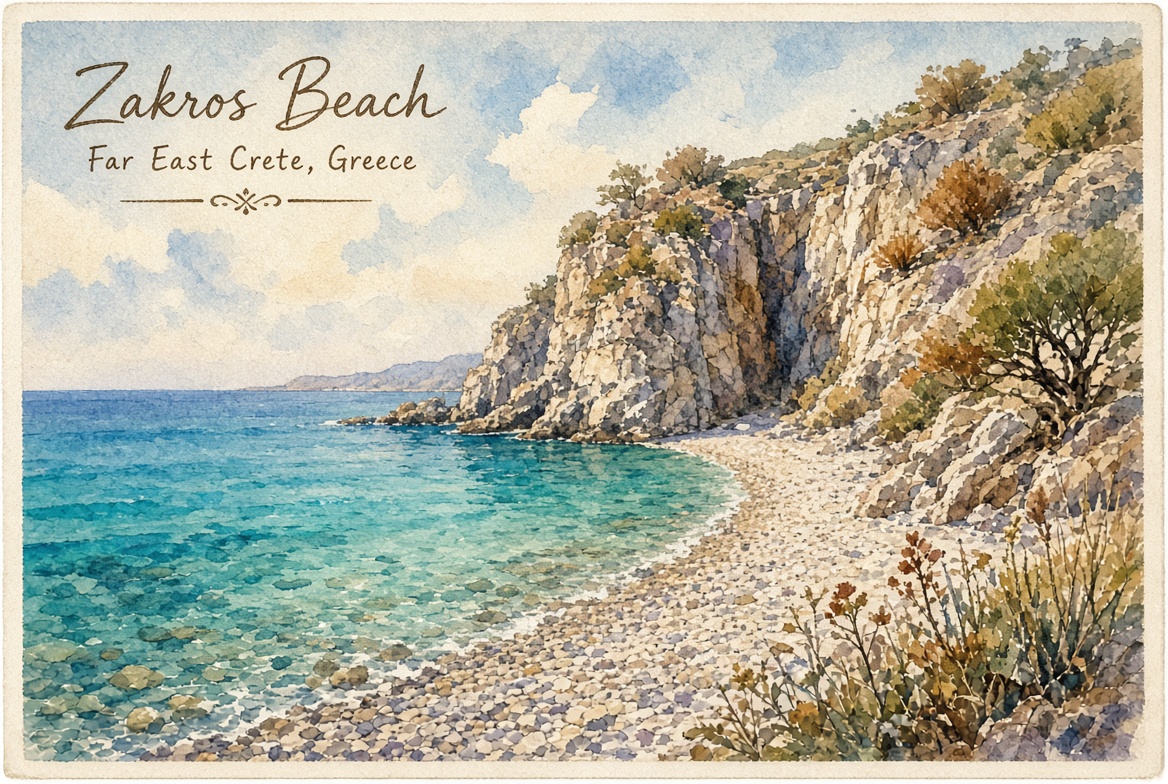
On Crete, two clear examples stand out. The far eastern coastline around Zakros and Karoumes still offers long, quiet stretches with far fewer umbrellas and almost none of the organized chaos found on the north coast. Further west but still well off the main circuit, the coves near Sougia and the quieter end of Paleochora continue to feel spacious even in August. Both areas reward the extra travel time with water that remains the main event rather than the backdrop.
On Ithaca, the beaches of Gidaki and Agios Ioannis remain relatively uncrowded compared with the better-known Ionian hotspots. The island’s limited scale and slower ferry connections have so far protected it from the full force of mass tourism that has transformed parts of Kefalonia and Zakynthos.
Elsewhere in Greece, the same pattern holds. In the Peloponnese, the quieter stretches of the Mani and certain coves in Messinia still deliver space and good tavernas. In the Dodecanese, smaller islands and less-promoted bays continue to offer the classic Greek combination of clear water and room to breathe.
Shoulder hours and secondary locations now matter more than ever. Arriving at a well-known beach at 9 a.m. or after 5 p.m. can still feel reasonable. Choosing the next bay along the coast, even if it has fewer facilities, often offers a better experience too.
Luxury in Greece in 2026 Equals Space
The travelers making these adjustments are not necessarily looking for isolation. They are looking for a version of the Greek summer that still contains room to breathe. In practical terms that means:
- Fewer people per square meter of sand
- Water that does not require weaving between floating platforms and jet skis
- Tavernas where the catch of the day is still the point
- The ability to hear the sea instead of the nearest speaker system
None of this requires secret knowledge. It requires only the willingness to trade a famous name for a better daily experience in Greece.
A Simple Rule for This Season in Greece
If a beach has its own dedicated hashtag with tens of thousands of posts, assume it will feel busy. If the last time you heard someone recommend it was more than five years ago, it may still be worth the extra twenty minutes of travel. The famous beaches of Greece are not going away. They will continue to draw crowds, and for many visitors that energy is part of the attraction. But for those who came for light, water, and a sense of ease, the smarter route in 2026 is increasingly the less obvious one.
The sea is the same. The difference is how many people are standing between you and it.

[…] που πραγματικά επιθυμούν οι άνθρωποι», τονίζει η ταξιδιωτική ιστοσελίδα argophilia, και εξηγεί σε σχετικό της άρθρο γιατί παρατηρείται […]