- Greece’s Infrastructure Ministry signed a €105.2 million contract with joint venture Indra Sistemas S.A. – ATESE to equip Heraklion’s new international airport with modern air navigation systems.
- The 27-month deal covers communications, surveillance, radar, approach simulators, and meteorological gear tailored to Single European Sky (SES) standards.
- Officials report overall civil construction has hit 76%, maintaining a target commercial opening date of November 2028.
Crete’s future international airport at Kastelli has reached another important milestone last Friday, with the signing of a €105.2 million contract for the supply, installation, and commissioning of its air navigation systems.
“Today marks an important milestone that brings us closer to the airport’s opening. This is a project that we believe will support Crete’s development for decades to come,” said Nikos Anastasiou, CEO of Heraklion International Airport of Crete S.A. (DAIK S.A.).
The agreement, signed between Heraklion International Airport of Crete (HIAC) and the Indra Sistemas S.A. – ATESE joint venture, covers everything needed to guide aircraft safely through Crete’s skies. Communications, navigation, surveillance, meteorological equipment, simulators, software, staff training, and technical support all form part of the package.
Georgios Vagenas, Director General of the Civil Aviation Authority, said: “Today’s signing of the agreement marks the start of the installation of the air navigation equipment necessary for the operation of the new Heraklion International Airport in Kastelli, Crete. The overall infrastructure for this equipment complies with the high safety standards mandated by international and European regulations.”
The contract will run for 27 months, during which the airport’s communications, navigation, surveillance, weather monitoring, and air traffic management systems will be installed and tested to meet the standards of ICAO, EASA, the Single European Sky, and EUROCONTROL.
Minister of Infrastructure and Transport Christos Dimas, standing before the rising air traffic control tower, noted that the project has now reached 76 percent completion. The technology being installed will comply with the most rigorous international standards, including the Single European Sky (SES) and EUROCONTROL protocols. For the traveler, this translates to something highly tangible: smoother approaches, fewer summer holding patterns over the sea, and advanced meteorological systems that will navigate the notorious autumn meltemi winds with surgical precision.
The government’s target remains unchanged: November 2028.
Now, if you’ve lived in Greece long enough, you’ve probably learned to treat infrastructure deadlines the way sailors treat weather forecasts. They’re useful, they’re encouraging, and occasionally they’re even correct.
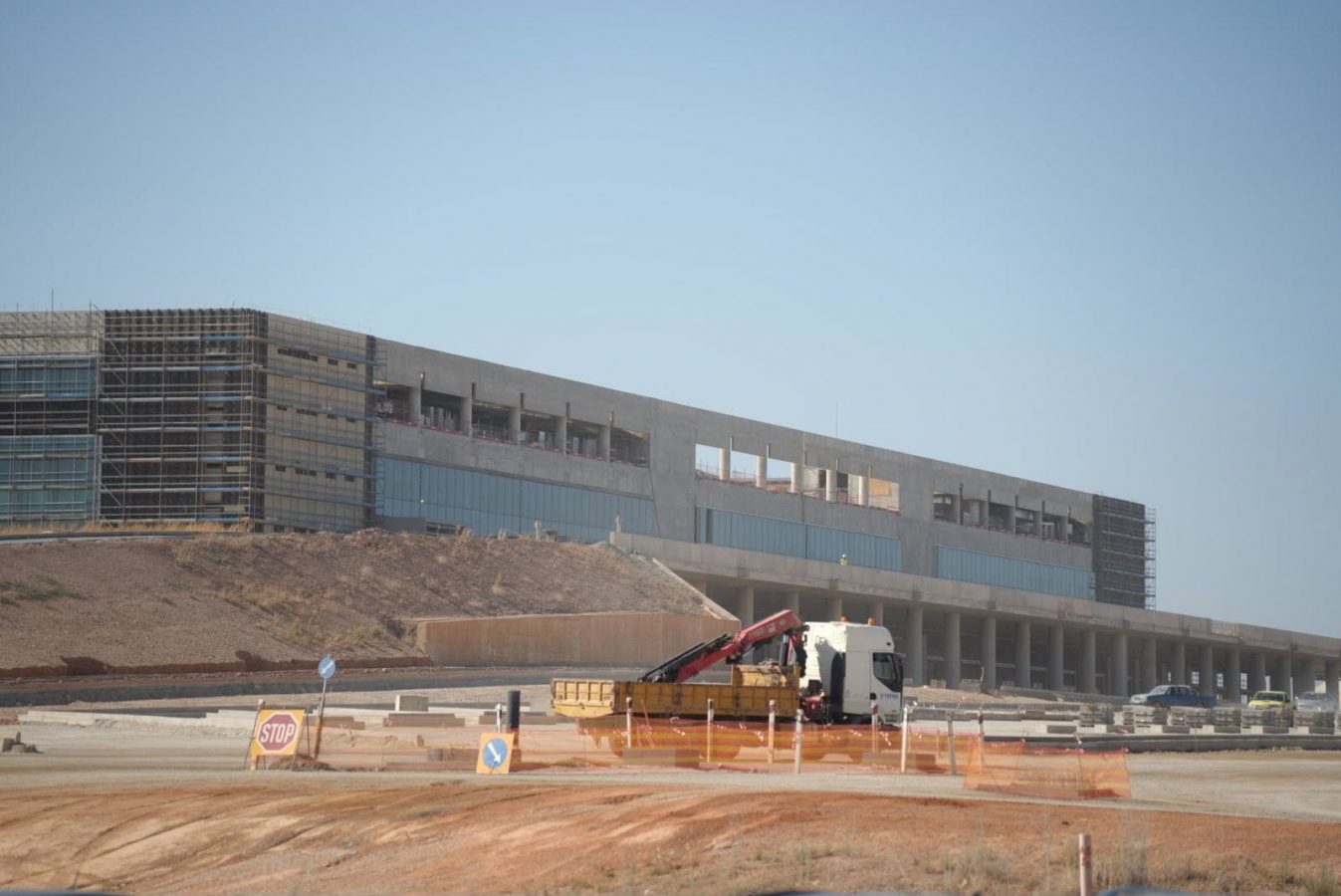
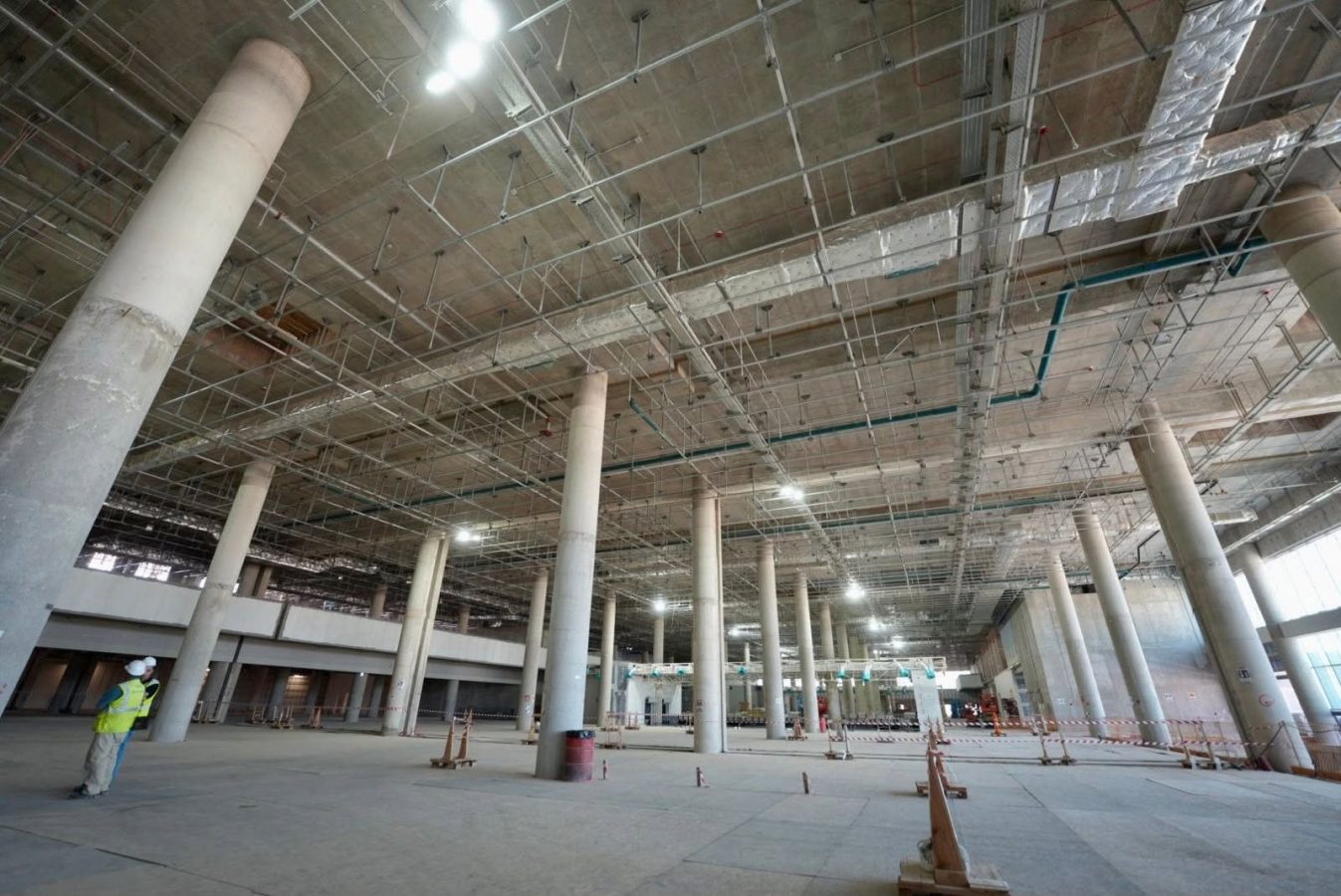
To be fair, Kastelli has made visible progress over the past year. The control tower is rising above the construction site, the runway continues to take shape, and the airport is steadily evolving from an ambitious blueprint into something that increasingly resembles an actual airport.
This latest contract is another genuine milestone. Aircraft cannot operate without sophisticated air navigation systems, and installing them represents one of the final major technical phases of the project.
So yes, November 2028 remains the official destination.
Whether it proves to be the arrival gate or simply another stop along the journey is a question that only time, concrete, and perhaps a few more contracts can answer.
