Another week, another Greek island declared an “untouched paradise.” This time it was Karpathos.
According to a recent chain of tourism reports and media rewrites, the island has emerged as a global beacon of authentic travel, sustainable tourism, cultural preservation, local gastronomy, meaningful experiences, pristine landscapes, emerald waters, and approximately every other phrase currently circulating through the international tourism-industrial vocabulary system.
None of this is entirely false. That is what makes modern tourism journalism so fascinating. Places are not usually misrepresented through lies. They are flattened through repetition. The same words now appear so frequently in travel coverage that entire destinations begin sounding interchangeable. Every island is authentic. Every village is hidden. Every coastline is pristine. Every destination is emerging. The result is a strange form of promotional hypnosis in which the language becomes more visible than the place itself.
Karpathos deserves better.
The island is not memorable because it possesses crystal water. Greece contains enough crystal water to emotionally destabilize Northern Europe. Karpathos matters because geography accidentally protected it.
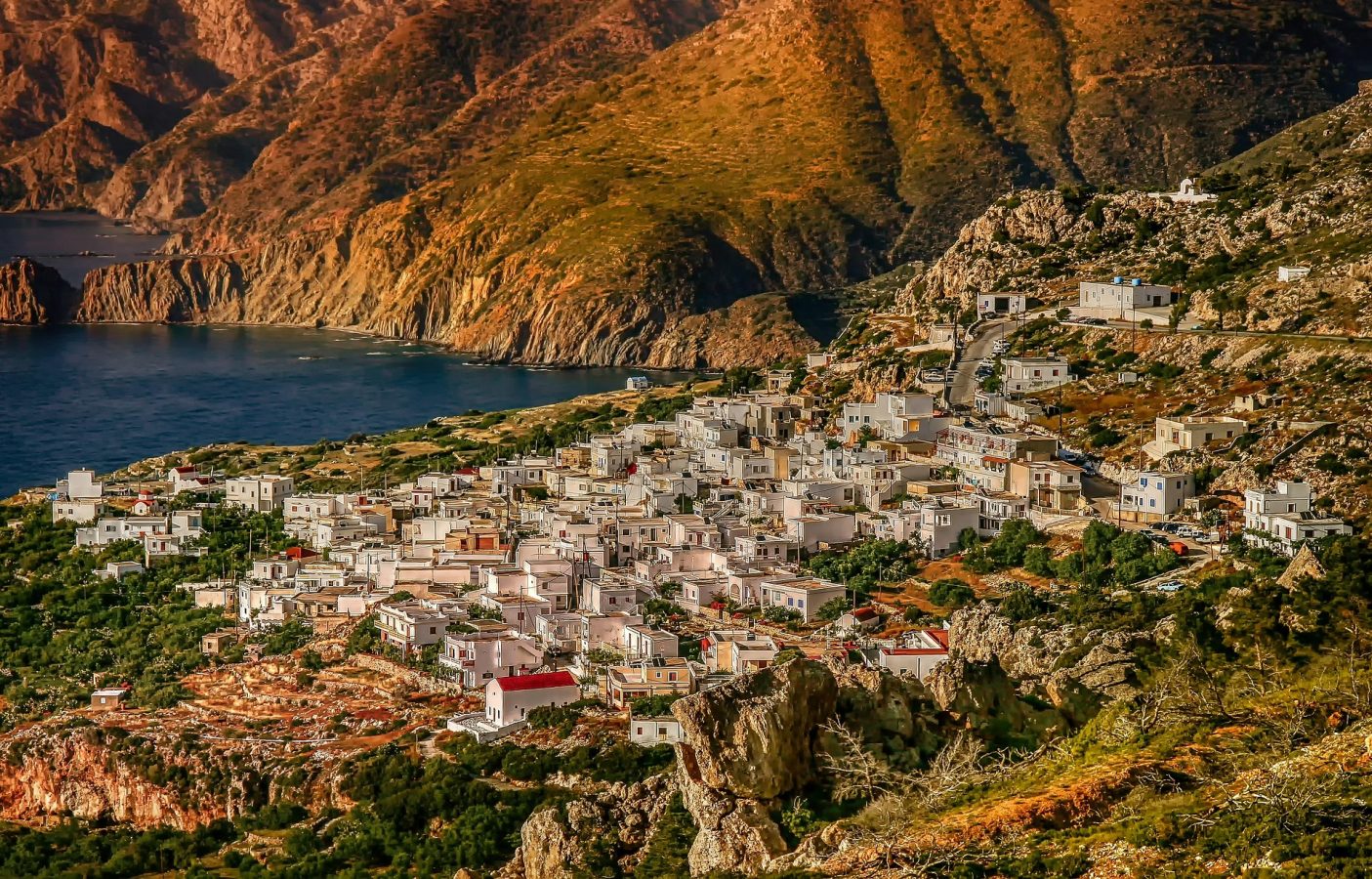
Unlike islands that evolved primarily around tourism infrastructure, Karpathos remained isolated for much of its modern history. Mountain ridges divide the island. Villages developed separately. Customs survived because convenience arrived slowly. Even today, the northern and southern parts of the island often feel like different worlds connected by road rather than identity. This becomes immediately apparent when approaching Olympos.
Travel writers often describe Olympos as a “living museum.” That phrase is overused, yet in this case one begins to understand why it persists. Older women still wear traditional clothing. Elements of older dialect survive. Customs remain visible not because somebody scheduled a cultural performance for tourists at 2 PM but because portions of local continuity somehow endured the great homogenizing machinery of modern tourism.
The village itself seems suspended between centuries. Wind moves constantly across the ridges above the settlement. Old windmills overlook steep slopes falling toward the sea. The roads approaching Olympos still possess enough exposure and isolation to remind visitors that geography once dictated culture far more aggressively than algorithms do today.
Yet even here, the reality remains more complicated than tourism brochures suggest. Olympos is no longer hidden. Summer visitors arrive daily. Excursion groups pass through. Souvenir shops exist. Tourism has arrived, as it eventually arrives everywhere. Yet something remains beneath the commercialization. The village still feels inhabited rather than staged. That distinction may be the most important one modern travelers can learn to recognize.
Elsewhere on Karpathos the island reveals another quality increasingly rare in Mediterranean tourism. Silence. Real silence. Not luxury-resort silence. Not wellness-retreat silence. Actual geographic silence produced by distance, wind, mountains, and the simple absence of excessive development.
Drive north beyond the larger settlements. Walk above Diafani. Follow old paths toward Avlona and the remote landscapes approaching Vrykounta. The island gradually begins shedding the vocabulary tourism marketers prefer and revealing something more difficult to package.
Karpathos is not valuable because it is untouched. It is valuable because it remains partially untamed. Those are not the same thing. The most interesting destinations in the Mediterranean are rarely the ones that escaped modernity entirely. They are the places where modernity never fully completed its work. Karpathos exists within that tension. And perhaps that is why travelers increasingly remember it long after the photographs stop collecting likes.
About Karpathos
Karpathos is one of the most dramatic and culturally distinctive islands in Greece, rising from the southeastern Aegean between Crete and Rhodes like a mountainous frontier suspended between eras. The second largest island of the Dodecanese, Karpathos has become increasingly recognized among travelers seeking something beyond the polished rhythms of mass Mediterranean tourism. Yet unlike many destinations now marketed as “hidden gems,” Karpathos retains an atmosphere shaped as much by isolation, wind, and geography as by tourism itself.
Steep ridges divide the island into dramatically different regions, where remote villages cling to mountainsides above deep blue seas and old footpaths still connect settlements shaped by centuries of difficult terrain. In places like Olympos and Diafani, elements of older island life remain visible not as staged performances but as living continuity. Traditional architecture, local music, village festivals, and deeply rooted culinary customs still form part of everyday life across much of the island.
Karpathos is also known for its extraordinary natural landscapes. Rugged coastlines, hidden beaches, crystal-clear waters, and exposed mountain roads create an environment ideal for hiking, diving, sailing, windsurfing, and slow exploration. Unlike more heavily commercialized Greek islands, Karpathos still contains large areas where silence, distance, and the raw presence of the Aegean dominate the experience.
Increasingly praised by international travel writers and independent travelers alike, Karpathos appeals to visitors searching not simply for scenery, but for a deeper sense of place. It remains one of the few Mediterranean islands where modern tourism exists alongside a powerful feeling that the island’s older rhythms have not entirely disappeared.
In Greek legend, Karpathos is considered the island of the Titans. It is said that after their defeat by the Olympian gods, the Titans found refuge in the island’s rugged mountains.
Great Places to Eat on Karpathos
Tavern Under the Trees
Simple traditional taverns dot the landscape of Karpathos, and remain among the island’s most memorable dining experiences, not because of luxury presentation, but because meals still emerge from local rhythms. Fresh bread, goat dishes, honey, handmade makarounes pasta, and strong wine arrive slowly beneath wind and mountain silence. Taverna Under the Trees, in on the West Coast between Lefkos and Finiki, is consistently one of the top rated eating places on the island.
Fresh Fish in Diafani
The small harbor village of Diafani offers some of the island’s best seafood. Evening meals beside the water, with fishing boats rocking quietly nearby, often become less about dining and more about lingering. Anemoessa is a highly prized bar and restaurant a few steps from the small port of the village.
Pigadia After Midnight
Karpathos’ capital has modern cafés, bars, and tavernas that remain active long after smaller villages sleep. Yet even here, the atmosphere remains more restrained than the polished nightlife ecosystems of better-known Greek islands. Another of the island’s best restaurants is located in Pigadia, on the harbor. Grande Cafe Bar is a family-run upscale affair with amazing rooftop views and a large menu that includes succulent Greek classics like moussaka, stifado, slow-cooked lamb, plus other Mediterranean fare.
Village Family Kitchens
Some of the best meals on Karpathos still happen in small family-run establishments where menus change according to weather, fishing conditions, or whatever arrived from nearby farms that morning. On the West of Karpathos, the seaside village of Finiki, which was founded by local fishermen. Mama Cousine (also known as kokoma) is another of the island’s most highly rated eateries. This quaint place is located right on the small beach near the marina of the tiny town.
Roadside Stops Between Villages
The island’s geography encourages slow wandering. Tiny roadside cafés and village bakeries often produce the meals travelers remember most: coffee, olives, fresh tomatoes, grilled meats, and pastries eaten while staring across mountains toward the sea. Taverna Kali Limni – Kali Kardiá, adjacent to the rugged Kali Limni hiking trail, is just such a place, albeit a bit harrowing to get to. Reviews rave about the experiences here.
Five Adventures on Karpathos
Driving the Mountain Roads to Olympos
The road itself becomes part of the experience. Sharp ridges, exposed turns, sea views, and constantly shifting light make northern Karpathos feel far removed from the smooth tourism corridors of the Mediterranean.
Hiking to Remote Beaches
Karpathos still contains beaches accessible only by foot or boat. Hiking trails leading toward hidden coves reward patience with isolation increasingly difficult to find elsewhere in Greece.
Exploring Ancient Paths Near Avlona
Old footpaths connecting villages and shepherd routes reveal the island’s older geography. Walking these trails offers a glimpse into how isolated communities once survived before modern roads altered movement across the island.
Diving and Coastal Exploration
The waters surrounding Karpathos remain remarkably clear. Diving, snorkeling, and small-boat exploration reveal caves, cliffs, reefs, and marine landscapes largely untouched by mass tourism infrastructure.
Wind and Sea Sports
Karpathos has quietly become respected among windsurfing and kitesurfing enthusiasts due to strong and reliable winds, particularly around Afiartis. Unlike heavily commercialized sports destinations, however, the island still retains a rougher, less polished atmosphere.
Cultural Experiences on Karpathos
Olympos Village
No place on Karpathos better illustrates the island’s cultural continuity than Olympos. Traditional dress, dialect, architecture, and local customs still remain visible within everyday life.
Village Festivals and Panigiria
Summer festivals across the island combine music, dancing, religion, food, and local identity in ways that feel deeply communal rather than performative.
The Churches and Monasteries
Small chapels appear throughout Karpathos, often perched on ridges or hidden beside mountain roads. Many feel less like tourist sites and more like quiet markers of continuity.
The Sound of Karpathian Music
Traditional Karpathian music remains emotionally central to island identity. Local celebrations still feature live instruments, improvisation, and dances connecting generations through memory rather than entertainment branding.
Watching the Island Slow Down
The deepest cultural experience on Karpathos is simply remaining long enough to notice its rhythm. Villages quiet after sunset. Harbors empty. Wind moves through the mountains. The island gradually reveals itself beyond tourism language.
Photo credit: Thanks to My Greece Travel Blog for the Instagram share.
